Variable Data Printing and Serial-Numbered Labels
Variable data printing applies a different value to every label — serial number, lot, date, barcode — for unique traceability. This guide covers printing methods, data-file preparation, numbering and error control.
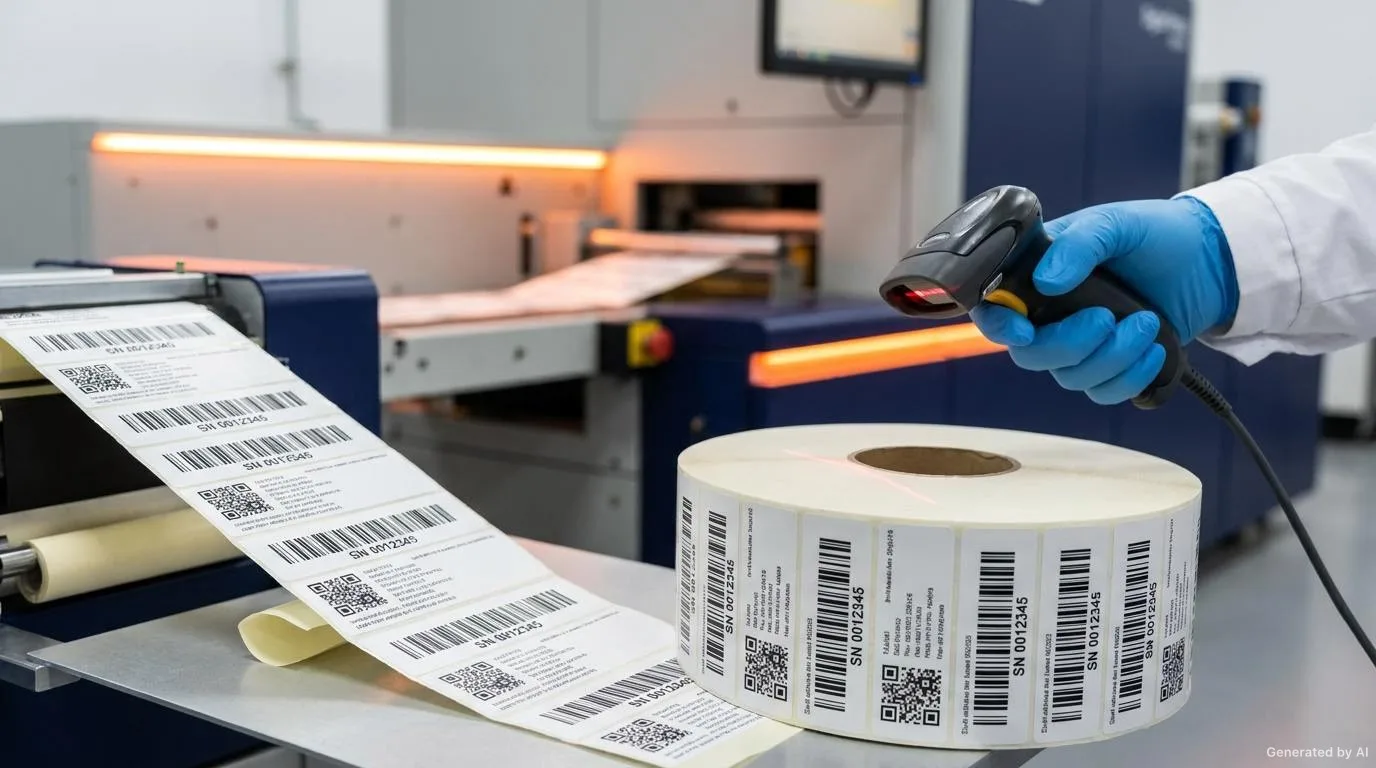
Variable data printing means that within a single print job, every label carries different information. Serial numbers, lot or batch codes, production and expiry dates, barcodes or QR codes, human-readable text, operator or line codes — these change from label to label. The purpose of this approach is to make each product or package individually traceable.
What Is Variable Data Printing?
In static printing every label is identical: a plate or die is prepared once and all labels carry the same image. In variable data printing, the content of each label is determined at the moment of printing. The design stays the same; only the variable fields — serial number, date, lot code, barcode — change label by label.
The method is essentially a data-merge process in which variable fields are placed into a fixed template. It is often also called numbered labelling, variable data labelling or serial-numbered labels.
Types of Variable Data
The fields that make a label variable usually fall into these groups:
- Serial/unique number: an increasing number unique to each item.
- Lot/batch code: shared by products from the same production batch.
- Dates: production, expiry, shelf life.
- Barcode/QR code: carries the data in a machine-readable form.
- Human-readable text: a readable copy printed beside the barcode.
- Operator/line code: information about the line or operator that produced it.
- Weight/quantity: values that change after weighing or filling.
Variable Data Printing Methods
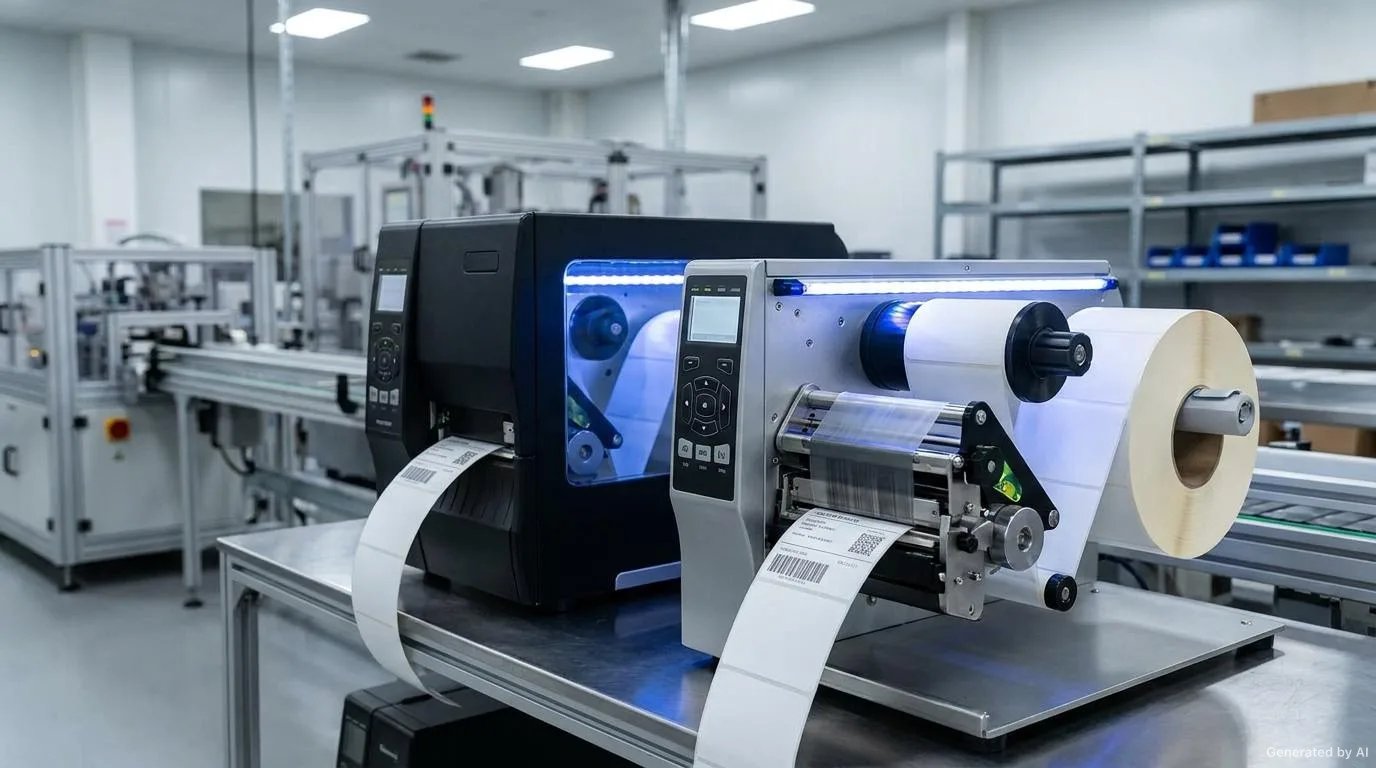
There are several ways to print variable data. The choice depends on quantity, material, readability requirements and durability expectations. Below is a general comparison of the common methods.
| Method | Working Principle | Strength | To Watch |
|---|---|---|---|
| Thermal transfer | Transfer from a ribbon onto the surface by heat | High-contrast barcodes, durability on synthetic materials | Ribbon cost; correct ribbon–material match |
| Digital inkjet | Ink jetted as droplets onto the surface | Plateless, high-speed variable data | Ink type and drying; surface compatibility |
| Laser (toner) | Electrostatic charging and toner transfer | Fast, sharp text on sheet work | Abrasion resistance on some synthetic surfaces |
The values in the table are meant to show each method's character; the real choice is made according to the specific conditions of the job. For example, direct thermal may be preferred for short-lived, internal-use labels, while thermal transfer or a solution with a protective coating comes to the fore when long life and harsh conditions are required.
For a detailed comparison of printing technologies, see our article Thermal Transfer and Direct Thermal Printing.
How Is the Data File Prepared?
The backbone of variable data printing is a correctly prepared data file. The most common format is a table file (CSV or Excel) in which each row corresponds to one label. The columns represent the variable fields and the rows represent the labels to be printed.
Order and Field Layout
The file should contain a header row and each column should correspond to one field. Serial numbers should be stored as text rather than numbers to preserve leading zeros; otherwise values such as "00123" may be converted by spreadsheet software to "123".
- Each row should correspond to one label and each column to one variable field.
- Serial-number and barcode fields should be stored as text.
- The date format should be defined in advance and used consistently.
- Empty fields and duplicate records should be identified before printing.
- The file encoding (such as UTF-8) should be consistent.
Numbering Rules
Serial numbering should follow a predictable and auditable rule. Rather than random numbers, use a fixed width (for example eight digits), zero-padding and, where needed, a prefix or suffix. A prefix may carry the year or product code and a suffix the batch information.
One common way to improve the reliability of a number is a check digit. The check digit used in barcode standards is the last digit of the number, calculated by an algorithm, and it helps to catch reading errors. If a check digit is to be used, the rule should be defined up front and data generation carried out accordingly.
Relation to Barcodes and QR Codes
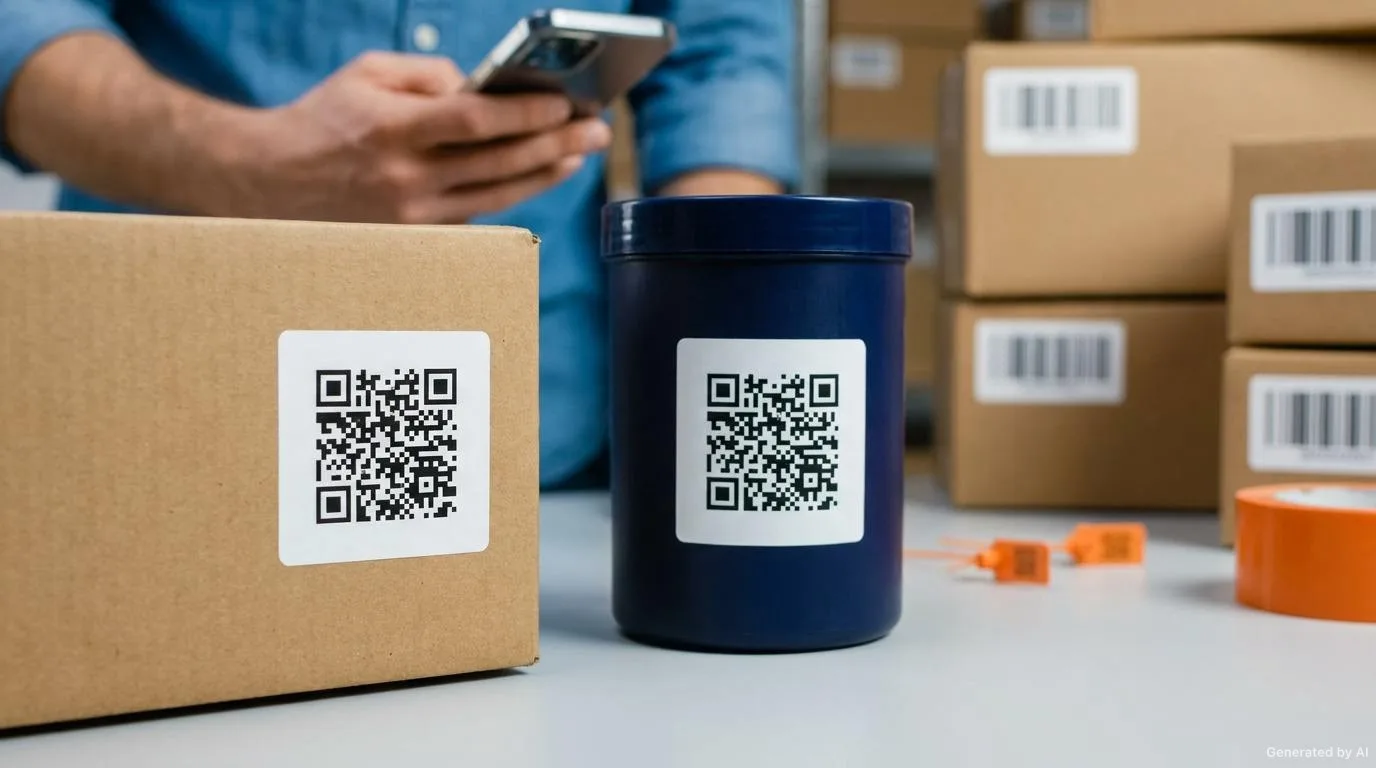
The serial number is often carried inside a barcode or QR code so that both humans and machines can read it. Printing the barcode correctly and keeping it readable is a separate matter; on this point our article Barcode Labels: Correct Printing and Readability is a useful guide.
Skipped Sequences and Error Control: Scan-to-Verify
The most critical risk in variable data printing is that the printed data does not match the expected data exactly. A number may be skipped, duplicated, or printed as a barcode too poor to read. The common way to prevent this is post-print verification (scan-to-verify): each label's barcode is read one by one and compared with the expected record.
Verification catches skipped numbers, duplicates and unreadable codes before the labelling stage. A defective label is marked and voided, so faulty data never reaches the field.
Reprint Risks
When a label is damaged or missing from a sequence, it may need to be reprinted. But a reprint, if not carefully managed, creates a serious traceability problem: the same serial number may be printed on more than one product, or a gap may appear in the number sequence.
For this reason, reprints should record which number was reprinted and why, voided labels should be physically separated and destroyed, and the serial range should be monitored centrally. A duplicate noticed later creates serious problems in recall and audit processes.
Applications of Variable Data Labels
Variable data printing is used in virtually every sector that requires unique traceability:
- Pharmaceutical and healthcare: traceability with serial number, lot and expiry date.
- Food: batch/lot tracking, production and best-before dates.
- Textile: labels carrying size, batch and product code.
- Event tickets: a unique barcode on every ticket; prevents copying.
- Courier and logistics: a unique barcode per parcel and pallet.
- Production/assembly: monitoring with operator, line and shift information.
For barcode use in logistics and warehouse flow, see Barcode Labels in Logistics and Warehouse Processes, and for textile specifically, Textile and Product Identification Labels.
A Practical Checklist
You can review these steps when planning a variable data label job:
- Are variable and fixed fields clearly separated?
- Is the data file prepared with one label per row?
- Are the serial-number and barcode fields in text format?
- Are the numbering width, prefix and check-digit rule defined?
- Are the starting number and total quantity fixed?
- Has a check been made for duplicate and empty records?
- Is post-print scan-to-verify planned?
- Is a separation procedure defined for defective and voided labels?
- Is the number-tracking method for reprints defined?
A Realistic Use Scenario
A mid-sized food producer wants to print a lot number and best-before date on every package. Because the production line is fast, the labels must be printed inline, in sequence. The producer generates the data file from daily production records and writes that day's lot code and date into each row.
After printing, a reader at the end of the line scans each barcode and compares it with the expected record. When a label is unreadable or out of sequence, it is diverted from the line and voided. This setup prevents a package carrying a wrong lot from reaching shipment; if a recall is needed, only the relevant lot is easily found. The gain here is not an extra cost but a guarantee of traceability and reputation.
Conclusion and Actionable Recommendations
Variable data printing makes each product and package individually traceable by printing different information on each label. The key to success is not only the printing machine but a correctly prepared data file, clear numbering rules and a verification step that compares printed data with expected data.
In practice, it is advisable to separate variable and fixed fields from the outset, to fix the serial-number format and not to skip post-print verification. For printing-technology choices, our articles Thermal Transfer and Direct Thermal Printing and Barcode Labels help you decide. You can browse suitable material and product options on our products page.
A Quote Tailored to You
For your variable data, serial-numbered label needs, simply share your quantity, numbering rule, material and usage conditions. Our team will evaluate a suitable printing method and data flow and get back to you. Click here to request a quote.
Frequently Asked Questions
What is the difference between variable data printing and ordinary printing?
In ordinary (static) printing all labels are identical; in variable data printing the content of each label is determined at the moment of printing, and fields such as serial number, date and lot code change from label to label.
Which printing method suits variable data?
Thermal transfer, digital inkjet and laser systems can all print variable data. The choice is made according to quantity, material, readability and durability requirements.
What format should the data file be in?
Usually a CSV or Excel file is used in which each row corresponds to one label. Serial-number and barcode fields should be kept as text so that leading zeros are preserved.
Why is scan-to-verify important?
Comparing each printed barcode with the expected data catches skipped numbers, duplicates and unreadable codes before the labelling stage, so faulty data does not reach the field.
Why is reprinting risky?
If not managed carefully, the same serial number may be printed on more than one product, or a gap may appear in the number sequence. Reprints should therefore be recorded and the serial range monitored.
Want to Determine the Right Label for Your Product?
Share your usage area and needs with us; let's evaluate suitable options together.