Barcode Labels in Logistics and Warehouse Processes
A practical guide to pallet, carton, shelf and location labels; barcode size, reading distance, quiet zone, surface and adhesive selection, cold store conditions and resistance to abrasion.
In logistics and warehouse operations, barcode labels are the basic information carriers that make a product and a package traceable. Reading a pallet, a carton or a shelf location correctly has a direct effect on stock accuracy, shipping speed and error rate. The labour lost when a label is misread or cannot be read at all is generally far greater than the cost of the label itself.
In this article we examine the barcode labels used in logistics and warehouse processes under the headings of pallet and carton labels, shelf and location labels, barcode size and reading distance, quiet zone, surface and adhesive selection, cold store conditions and resistance to abrasion. Our aim is to make the technical decisions that reduce field reading problems understandable.
The role of the barcode label in logistics
In warehouse and logistics processes the barcode is the first link in the data collection chain. The barcode on the label is read by a handheld terminal, a fixed scanner or a camera system, and this read turns into a stock movement. For this reason the print quality, surface durability and position of the label affect the accuracy of the entire process. A single unreadable label leads to manual data entry and with it the risk of error.
The main difference that separates logistics labels from other label types is that they are exposed to harsh conditions even though they are short lived. Abrasion, dust, moisture, temperature changes and a fast working pace determine how reliable the label is in the field. Label selection should therefore be made on the basis of the use scenario, not on price alone.
Pallet, carton and shipping labels
Different levels of labels are used in the shipping process. Each level requires a different size, durability and reading distance. Positioning the labels at the right level improves both reading speed and process flow.
Pallet labels
Pallet labels are generally designed to be large and readable from a distance. When applied to more than one face of the wrapped pallet, the aim is that it can be read from whichever direction it is approached. Pallet labels can carry carton and product information together. Because the surface is usually cardboard or stretch film, it is important that the label bonds well to these surfaces and does not lift at the edges.
Carton and shipping labels
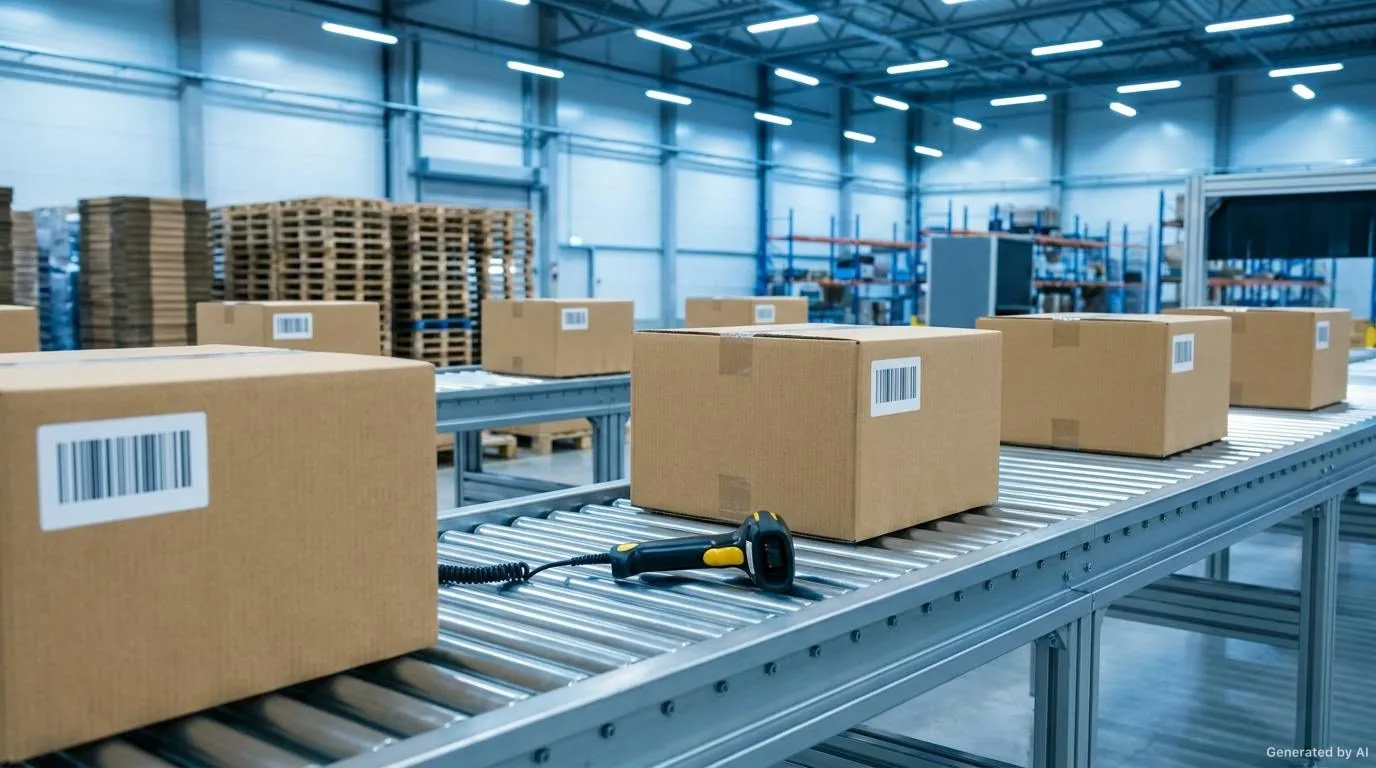
Carton labels are medium sized and carry the contents and destination of a single package. They are the label group that wears the most during transport, due to stacking, abrasion and manual contact. For this reason, a print image that resists abrasion keeps the barcode readable throughout the process.
Return and routing labels
In return and routing flows some labels are updated later or new information is added on top. In such cases a label surface that is writable and accepts a new label makes the workflow easier.
Shelf and location labels
Shelf and location labels inside a warehouse are fixed reference points that define where products are located. These labels are usually long lived and stay in the same environment continuously. They carry data such as the shelf code, the bin number and the location information. Their readability has a direct effect on the speed of the picking process.
Durability in shelf labels
Metal shelving, dusty environments and regular cleaning can wear down shelf labels. A rough or oily shelf surface can make bonding difficult. For this reason, an adhesive suitable for the surface and, where needed, a protective surface coating should be considered for shelf labels.
Location and bin labels
Location labels mark shelf bins or floor areas. Floor labels are the most demanding group in terms of abrasion and wear because they are exposed to forklift and pedestrian traffic. In these areas, materials with high durability and strong adhesives are preferred.
Barcode size, module width and reading distance
The readability of a barcode starts with its sizing. The smaller the barcode, the harder it becomes for the reader to detect it clearly. The barcode size should therefore be determined according to the distance at which it will be read and the type of reader used. Handheld terminals can work at a short distance, while fixed scanners can work at a greater distance.
The module width is the width of the thinnest bar in the barcode and is directly related to the print resolution. As the module width shrinks, the barcode takes up less space, but the reading tolerance decreases. The printer resolution must be at a level that can cleanly produce the intended module width.
Reading distance and barcode height
As the reading distance increases, the height of the barcode should also increase. On pallet labels read from a distance, the barcode is kept larger than on carton labels read at short range. When the barcode height is insufficient, the reader may read incomplete data even if it detects the barcode.
Why the quiet zone is required
The quiet zone is the area left blank on both sides of the barcode. The reader detects the start and end of the barcode thanks to this space. When the quiet zone is violated, nearby text or a line may be mistaken for part of the barcode and reading errors increase. Sufficient space for the quiet zone should therefore be planned at the design stage.
Surface and adhesive selection
Logistics labels are applied to different surfaces such as cardboard, stretch film, wood, metal shelving or plastic crates. Because the energy level and roughness of each surface differ, the adhesive behaviour also changes. On rough and porous surfaces, stronger adhesives that can fill gaps may be suitable, while on flat surfaces adhesives that bond in a balanced way are appropriate.
A clean, dry and dust free application surface has a direct effect on bonding. Applying to cold or damp surfaces makes the adhesive choice even more critical. To assess adhesive selection in more detail you can look at our article on how to choose a label adhesive.
Cold store conditions
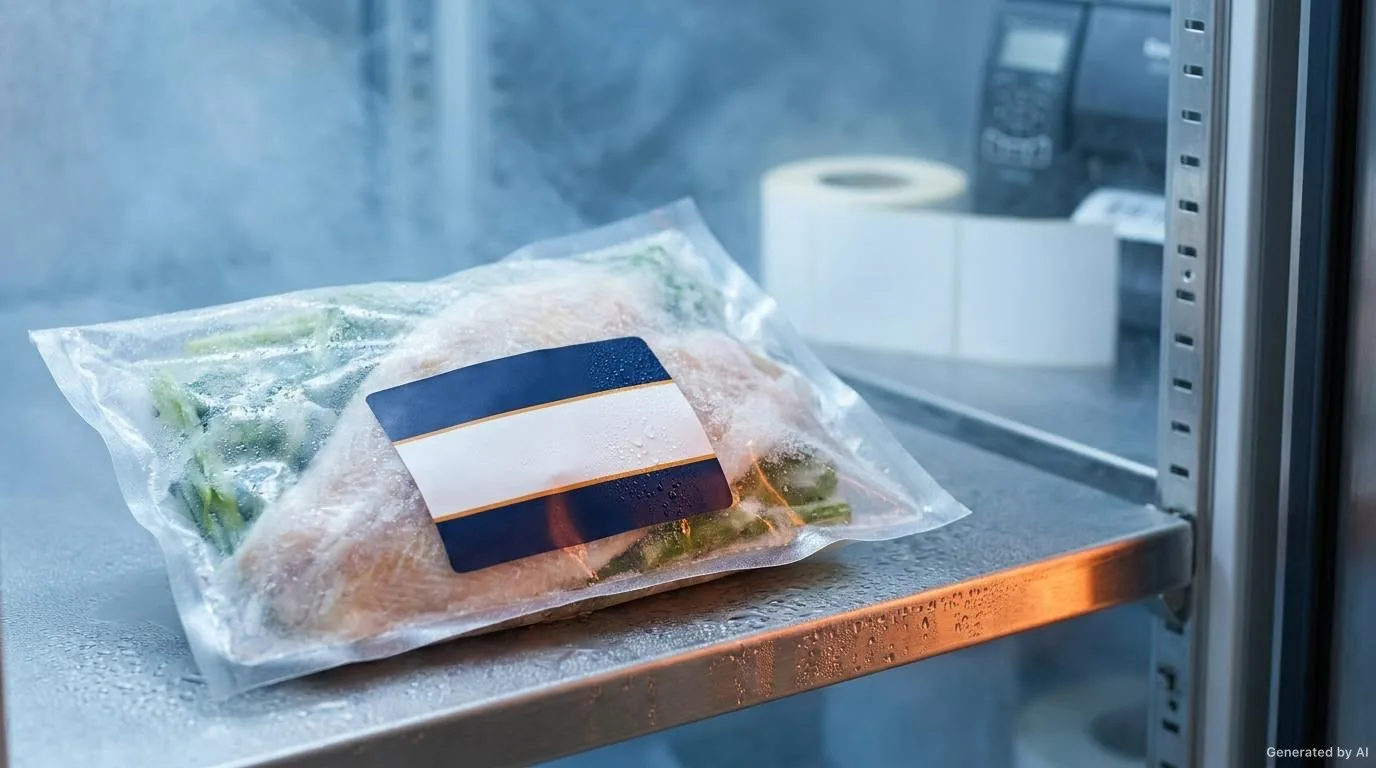
In cold store and cold chain applications the temperature is low and condensation may appear on surfaces. Standard adhesives can lose their bonding strength under these conditions. Adhesives developed for cold environments that can bond at low temperature should be preferred. The temperature of the application surface is one of the key factors determining whether the label remains permanent in the field.
Resistance to abrasion, moisture and damage
In logistics labels are constantly in motion. Boxes rub against each other, pallets are moved, and labels come into contact with shelves and vehicle surfaces. These contacts can abrade the print image. Printing methods and surfaces with high abrasion resistance preserve barcode readability for longer.
Moisture can cause rippling and edge lifting on paper based labels. In wet or damp environments the barcode contrast can drop. Under such conditions, film based materials and moisture resistant printing options give a more reliable result. For the effect of the printing method on durability, our article on thermal transfer and direct thermal printing will be a helpful guide.
Manual relabelling and process discipline
An unreadable label in the field is usually relabelled by hand. This leads to both a loss of time and a new risk of error. The way to reduce the need for relabelling is to choose the right material, the right adhesive and the right printing method from the start. Positioning the label correctly also reduces reading errors.
When the label application process is standardised, it becomes easier for different operators to produce the same result. A simple check step for application direction, position and print quality prevents a large part of the problems that would otherwise appear later. Order details such as roll layout and winding direction should also be clarified up front, since they affect application speed.
Comparison of label type and usage condition
The table below summarises the label types frequently used in logistics, with their typical surfaces and prominent requirements. The exact material and adhesive choice may vary according to the application.
| Label type | Typical surface | Prominent requirement | Points to watch |
|---|---|---|---|
| Pallet label | Stretch film, cardboard | Long distance reading, large barcode | Application to several faces |
| Carton label | Cardboard | Abrasion resistant printing | Stacking |
| Shelf label | Metal, shelf profile | Long life, clear reading | Dust and cleaning |
| Location label | Floor, shelf bin | High wear resistance | Forklift traffic |
| Cold store label | Damp, cold surface | Bonding at low temperature | Condensation |
Efficiency tips
Improving the label process does not require large investments; small and consistent adjustments make a clear difference in the field. Checking print quality regularly helps to spot faulty prints early. Applying labels in the same direction and at the same height helps readers to detect them faster.
The correct roll layout and winding direction increase manual application speed and reduce the number of wasted labels. Clarifying the winding details before ordering also prevents mismatches during application. Running a real condition test with a sample is the most practical way to see field problems in advance.
Checklist
- Have you determined the distance at which the label will be read and the reader type?
- Is the barcode size and height suitable for the reading distance?
- Is sufficient space left for the quiet zone?
- Is the type of application surface (cardboard, film, metal, floor) clear?
- Has a suitable adhesive been chosen for cold, damp or oily surfaces?
- Has the abrasion resistance of the print image been tested?
- Will pallet labels be applied to more than one face?
- Are the winding direction and roll layout suitable for the application method?
- Has a trial been carried out under real conditions with a sample?
Conclusion
In logistics and warehouse processes, barcode labels are a component that looks small but affects the accuracy of the entire operation. Pallet, carton, shelf and location labels each answer to different conditions. When the right barcode size, sufficient quiet zone, suitable adhesive and durable printing are considered together, field reading problems drop noticeably.
Clarifying material and printing decisions at the start of process design increases efficiency and prevents unnecessary relabelling cost. If you would like to define the most suitable label structure for your own warehouse and shipping flow, you can share your application conditions and request a technical assessment and sample support from us via our label solutions.
Frequently Asked Questions
Why are pallet labels applied to more than one face?
Pallets are approached and read from different directions. Labels applied to several faces make it easier to read the barcode whichever direction it is approached from.
Which adhesive should be chosen in a cold store?
Adhesives that bond at low temperature and are developed against condensation should be considered. The temperature and moisture of the application surface must always be tested.
Why does the quiet zone matter?
The quiet zone lets the reader detect the start and end of the barcode. When insufficient space is left, reading errors can increase.
What determines the barcode size?
The barcode size is determined by the reading distance and the type of reader used. Barcodes read at a longer distance should be larger and taller.
How can manual relabelling be reduced?
Choosing the right material, adhesive and printing method, placing the label correctly and standardising the application process reduce the need for relabelling.
Want to Determine the Right Label for Your Product?
Share your usage area and needs with us; let's evaluate suitable options together.