How to Choose Label Adhesive? Importance of Surface and Usage Conditions
Label adhesive selection by surface energy, application temperature, service conditions and removability. Adhesive type comparison, scenarios and checklist.
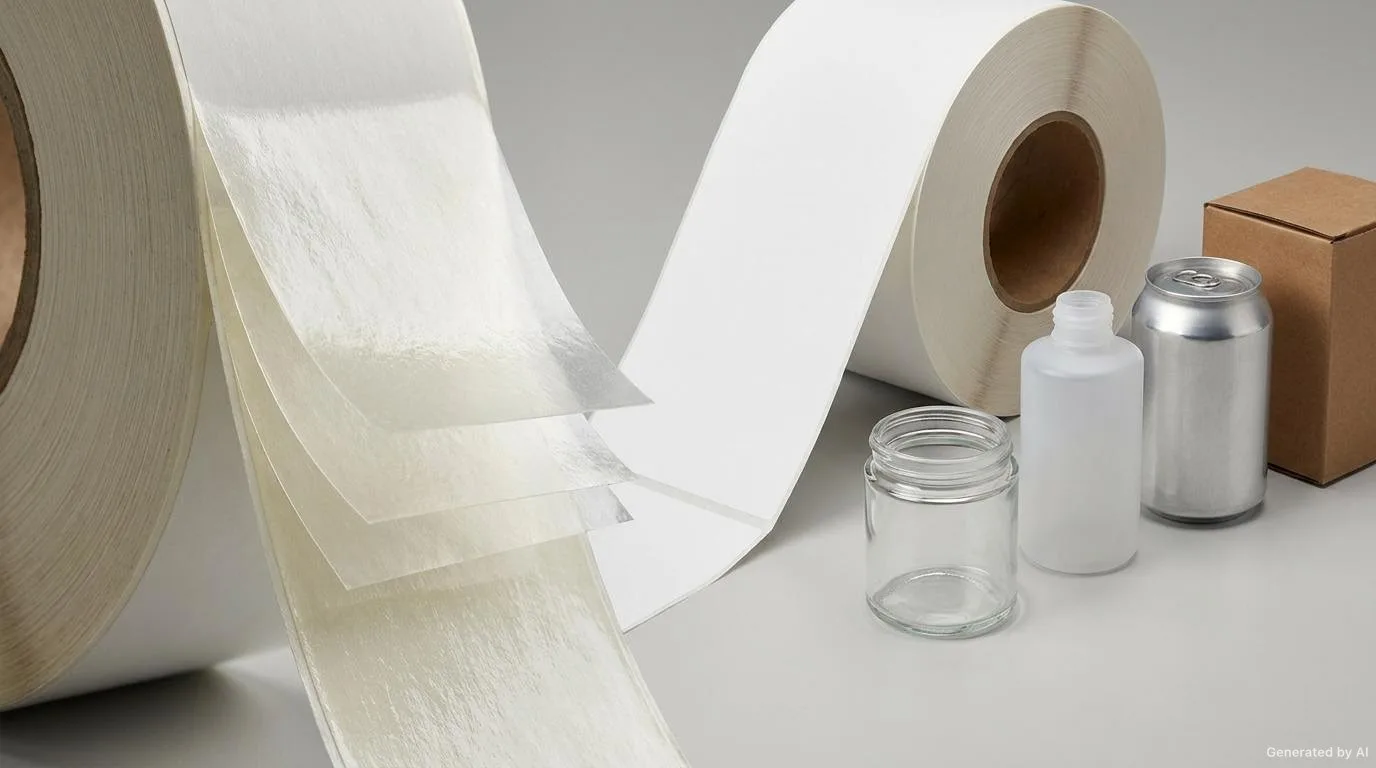
Label adhesive is the most critical component that holds the label to the surface. When the wrong adhesive is chosen, the label falls off, forms bubbles or fails to deliver the expected durability. Adhesive selection should not be based only on the question "how strong is it?", but evaluated together with surface energy, application temperature, service conditions and removability needs. In this article, we will examine step by step the importance of surface and usage conditions in label adhesive selection.
Surface Energy and Adhesion
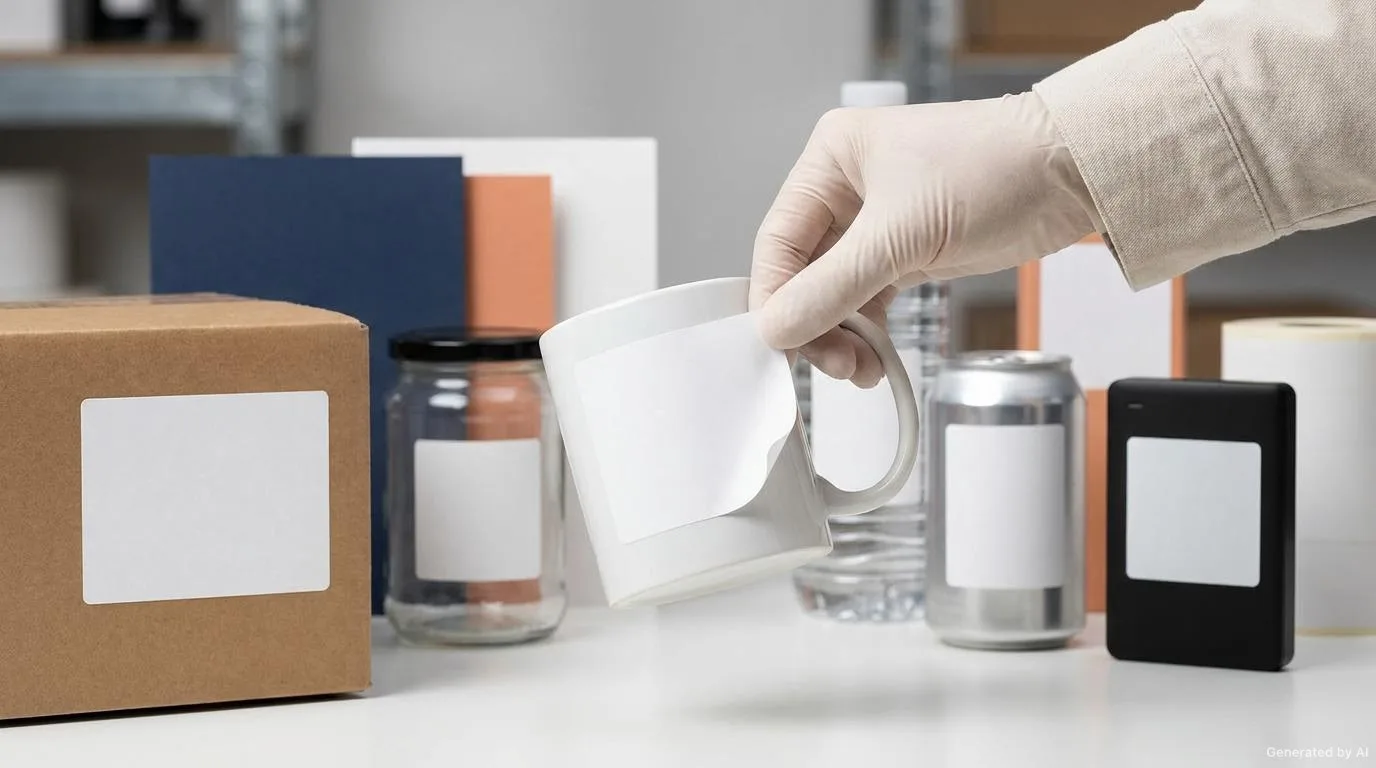
Whether the adhesive sticks to the surface depends on the surface energy of that surface. Surface energy is expressed in mN/m, and the higher the value, the easier it is for the adhesive to wet the surface. Adhesion is more reliable on materials with high surface energy:
- High energy surfaces (above 36 mN/m): Glass, metal, PET, PVC. Acrylic adhesives stick easily.
- Medium energy surfaces (30-36 mN/m): Wood, cardboard, painted surfaces.
- Low energy surfaces (below 30 mN/m): Polyethylene (PE), polypropylene (PP), PTFE. Special adhesives are required.
Why Is Surface Energy So Decisive?
The better the adhesive wets the surface, the wider the contact area and the stronger the bond. On low energy surfaces the adhesive does not spread sufficiently; as a result, the label lifts at the corners or peels off over time. On such materials, adhesive selection becomes even more critical than surface preparation.
What Should Be Done on Low Energy Materials?
For materials such as PE and PP, special adhesives with high bonding strength are preferred. Corona or flame treatments that increase surface energy can significantly improve adhesion. However, since the effect of these treatments may fade over time, sample testing before production is the most reliable approach.
Adhesive Types
The three most common adhesive families in label production are acrylic, rubber-based and silicone. Each family has different strengths and weaknesses:
| Adhesive Type | Properties | Suitable Use |
|---|---|---|
| Acrylic | Good temperature, chemical and UV resistance, long life | General purpose, outdoor, food, cosmetics |
| Rubber-based | High initial tack, low cost, low UV resistance | Indoor, short-life, cardboard surfaces |
| Silicone | Very high temperature resistance, low surface energy | Electronics, high temperature, silicone surfaces |
Acrylic Adhesives
Acrylic adhesives remain stable for a long time against UV, oxidation and temperature. Therefore they are frequently preferred in outdoor labels, food and cosmetic packaging and applications where long life is expected. Initial tack may be slightly lower than rubber-based adhesives, but the bond settles and becomes permanent over time.
Rubber-Based Adhesives
Rubber-based adhesives offer high initial tack and low cost. They perform well on cardboard, paper and indoor applications. On the other hand, their UV and high temperature resistance is limited; therefore they may not be sufficient alone for labels used outdoors or at high temperatures.
Silicone Adhesives
Silicone adhesives resist very high temperatures and low energy surfaces. They are preferred in electronics, silicone-coated surfaces and demanding temperature conditions. Their cost is higher than other adhesives and they are not necessary for every application.
Application and Service Temperature
Temperature determines the performance of the adhesive both during application and throughout its service life. It is important to distinguish two different temperature concepts:
- Application temperature: The temperature at the moment the label is applied. Most adhesives require a minimum application temperature of +10 degrees. Colder surfaces require low-temperature adhesives.
- Service temperature: The temperature range the label is exposed to during its lifetime. Acrylic adhesives typically perform between -40 and +120 degrees.
Why Is Application Temperature Critical?
For the adhesive to bond to the surface, it must soften enough and wet the surface. On cold surfaces the adhesive stays hard and does not establish sufficient contact with the surface, which causes the label to lift quickly. Therefore, in applications carried out in cold environments, special adhesives that perform at low temperature should be chosen.
How Is the Service Temperature Range Determined?
Determine the highest and lowest temperatures the label will be exposed to and compare them with the range in the manufacturer data sheets. Storage, transport and usage conditions may differ; taking the most demanding condition as the basis is the safest approach.
Moisture, Chemicals and Removability
The environment in which the label is used directly influences adhesive selection. Moisture, chemical contact and removability needs should be evaluated separately.
Humid and Wet Surfaces
In humid environments, water-resistant adhesives should be preferred. If condensation, rain or washing is involved, the water resistance of the adhesive must certainly be checked. Some labels can be applied to damp surfaces, but they need time for the bond to settle fully.
Chemical Exposure
On products exposed to solvents, oils or cleaning chemicals, acrylic adhesives with high chemical resistance stand out. Chemical resistance should be evaluated according to the way the product to be labeled is used.
Removable Adhesives
When removability is required (rental, promotional or temporary information labels), removable adhesives should be used. However, it should be remembered that removable adhesives may become permanent over time; therefore, if a residue-free removal is expected, it should be verified with a sample.
Surface Preparation and Application Conditions
Even the right adhesive will not perform as expected under the wrong application conditions. Therefore the application steps should also be planned carefully.
Surface Cleanliness
Dust, oil, moisture and residue on the surface weaken adhesion. The surface being clean and dry before application is the most basic condition. When necessary, the surface should be prepared with a suitable cleaner and allowed to dry completely.
Application Pressure and Time
When the label is pressed properly, the adhesive wets the surface better. Even and sufficient pressure applied by hand or machine reduces air pockets. Adhesion is usually not complete instantly; the bond strengthens in the first hours. Therefore, forcing the label immediately after application should be avoided.
Real-World Usage Scenarios
To make adhesive selection concrete, let us look at a few typical scenarios:
Scenario 1: Cold Chain and Food Packaging
On chilled or frozen products, the label is applied at low temperature and exposed to moisture condensation. In this case, a moisture-resistant adhesive that performs at low temperature should be chosen. The surface temperature at the moment of application must certainly be checked.
Scenario 2: Outdoor and UV Exposure
Labels used outdoors are exposed to sunlight, temperature fluctuations and moisture. Acrylic adhesives with high UV resistance and fade-resistant face materials should be evaluated together.
Scenario 3: Removable Labels
Rental, campaign or temporary information labels require both easy removability and the ability to stay fixed for a certain period. To achieve this balance, removable adhesives should be tested with a sample.
Adhesive Guidance by Condition
The table below summarizes which adhesive family is generally more suitable for common conditions. The final decision should be supported by sample testing and manufacturer data.
| Condition | Recommended Adhesive | Point to Watch |
|---|---|---|
| Low energy material (PE, PP) | Special acrylic / silicone | Surface energy, corona or flame treatment |
| Outdoor and UV | Acrylic | UV and temperature resistance |
| Cold application | Low-temperature adhesive | Application temperature, moisture |
| High temperature | Silicone / high-performance acrylic | Service temperature range |
| Removability | Removable adhesive | Residue-free removal, duration |
Adhesive Selection Checklist
Answering the following questions before ordering or production greatly reduces problems caused by the wrong adhesive:
- What is the surface material and its surface energy?
- Is the surface clean and dry?
- What is the application temperature?
- What are the highest and lowest service temperatures the label will face?
- Will there be moisture, water or chemical contact?
- Is there UV and outdoor exposure?
- Should the label be permanent or removable?
- What is the expected service life?
- Will application be done by hand or machine?
- Has a sample test been performed?
Common Adhesive Selection Mistakes
Most adhesive problems stem from a few common mistakes made during selection:
- Choosing based on cost alone: A cheap adhesive can lift quickly and create rework costs.
- Ordering without testing the surface: Every surface and condition combination behaves differently; sample testing should not be skipped.
- Ignoring the application temperature: On cold surfaces, a standard adhesive does not provide sufficient adhesion.
- Assuming removability: It should be remembered that removable adhesives may become permanent over time.
- Generalizing from a single sample: One successful test does not guarantee the entire production.
- Evaluating material and adhesive separately: The face material and the adhesive should be selected as a whole.
Sample Testing and Manufacturer Data
Rather than definitive compatibility claims, support your selections with sample testing and manufacturer technical data sheets. Every surface and condition combination can yield different results. Testing under real usage conditions before production is the most reliable way to prevent problems. Likewise, asking the right technical questions when choosing a label material speeds up the process; our article on technical questions to ask when choosing label material can be a helpful guide.
Conclusion
The correct adhesive selection is determined by surface energy, application temperature, service conditions and removability needs. Relying on sample testing and manufacturer technical data rather than definitive claims helps you make the right decision. To explore an application-specific range of options, you can browse our products page. If you would like to clarify your choice, we can determine the right solution for your needs together. To complete your preparation before ordering, you can also use our article on the quote preparation checklist.
Frequently Asked Questions
What is the most important criterion when choosing label adhesive?
Surface energy, application temperature, service conditions and removability needs should be evaluated together. A single criterion is not enough; the best result is confirmed by sample testing.
Which adhesive is used on low energy surfaces?
Special adhesives are preferred on low energy materials such as PE and PP; corona or flame treatment can improve adhesion.
Does a removable adhesive become permanent over time?
Yes, removable adhesives can become permanent over time. If residue-free removal is required, it must be tested with a sample.
Why is application temperature important?
On cold surfaces the adhesive stays hard and cannot wet the surface sufficiently, which causes the label to lift quickly. Low-temperature adhesives may therefore be needed.
Want to Determine the Right Label for Your Product?
Share your usage area and needs with us; let's evaluate suitable options together.