Lamination and Protective Coatings for Labels
We cover the coatings that protect a label surface: matte, gloss and soft-touch film, UV and water-based varnish, their differences, protection goals, readability and barcode effects, cost and the right lamination choice.
How long a label stays clean, legible and attractive on the shelf depends not only on the material and print quality. Protective coatings applied to the label surface — that is, lamination and liquid varnish — shield that surface against scratching, abrasion, moisture, chemicals, UV light and fingerprints. The right coating both preserves a product's appearance over time and safeguards the readability of barcodes and text.
In this article we look at what protective coatings do, the difference between lamination and liquid varnish, the matte, gloss and soft-touch lamination types, UV and water-based varnishes, their effects on readability, barcodes and laser printing, cost and aesthetics, and sector-specific use. The aim is to offer a practical framework for deciding which protective coating suits which product.
What are protective coatings and lamination?
A protective coating is a thin, transparent layer applied over the printed surface of a label. This layer protects the print and the material from external factors and also determines the texture and gloss of the surface, changing the label's visual character.
There are two main methods. Lamination applies a thin film (usually a transparent plastic film) to the label surface. Liquid varnish or coating is obtained by applying and drying a thin liquid layer on the surface. Both methods protect the surface, but the level of protection, cost and application differ.
The difference between lamination and liquid coating
Because lamination adds a separate film layer, it usually provides a thicker and more durable protection. The film clearly protects the surface against abrasion, scratching and moisture, so it is preferred in demanding conditions. On the other hand, lamination adds an extra layer and cost to the material and increases the total thickness of the label.
Liquid varnish offers thinner protection than film. It can be more economical to apply and changes the feel of the label less. However, it generally falls behind lamination in wear, scratch and chemical resistance. Liquid varnish therefore stands out where the protection need is relatively low but cost and visual impact matter.
Which method to choose depends on the product's service life, the conditions it will face, the run length and the budget. As a general rule, choose lamination when protection is critical, and consider liquid varnish when an economical surface effect is sufficient.
What are labels protected against?
The main purpose of protective coatings is to form a barrier against the factors that degrade a label surface over time. The main areas of protection are:
- Scratching and abrasion: reduces the surface wear caused by handling, transport, packing and stacking.
- Moisture and water: slows the deterioration of the surface under drips, condensation, refrigeration and humid conditions.
- Chemical contact: reduces staining and wiping of the surface in products containing detergent, alcohol, oil and solvents.
- UV light and fading: delays the fading of colours and print under sunlight and strong lighting.
- Fingerprints and smudges: reduces the visibility of marks and oil smudges when the surface is touched.
The weight of these protection areas changes with the product type. A label used briefly indoors and a label that stays outdoors for months have very different needs.
Lamination types: matte, gloss and soft-touch
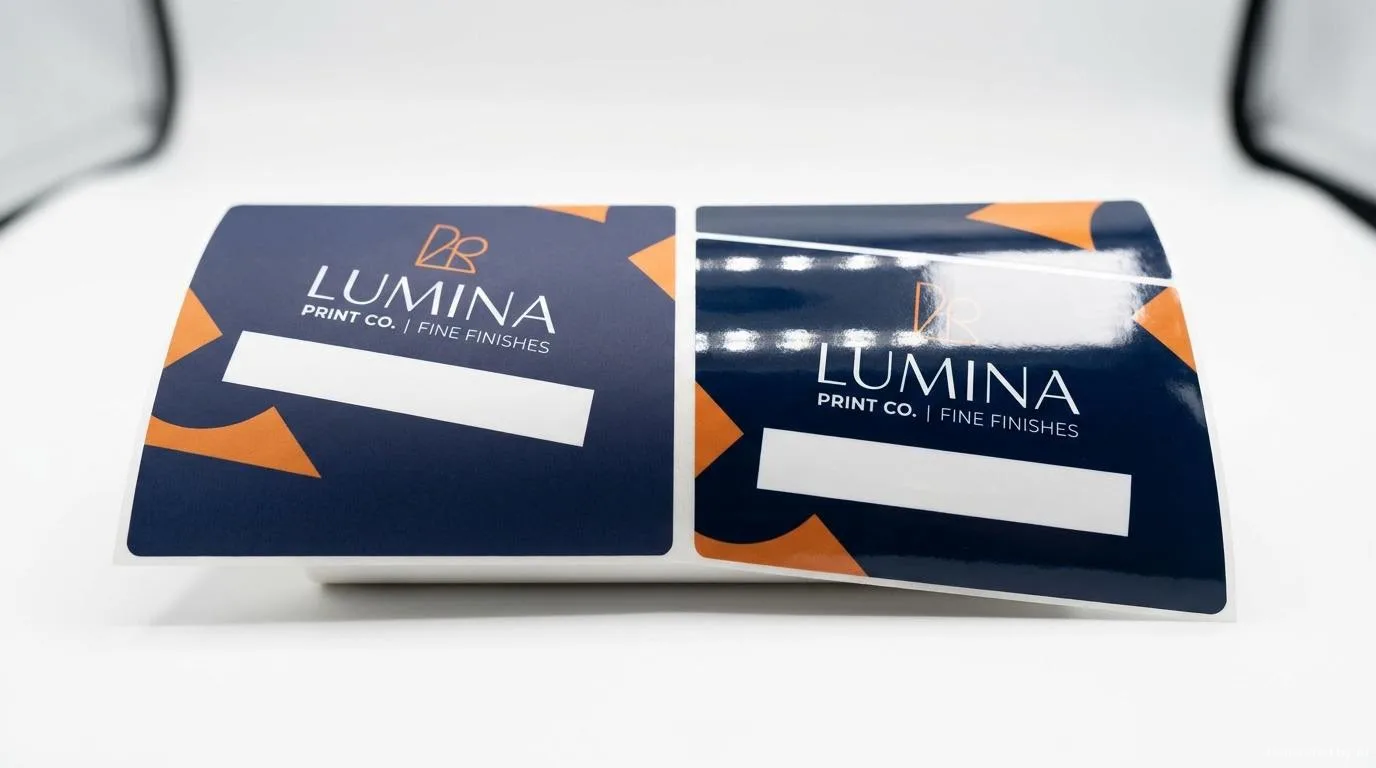
Gloss lamination reflects light and makes colours more vivid and the surface sharper. It is often chosen for a premium and luxurious perception and gives striking results in photo and gradient designs. On the other hand, a gloss surface can make readability harder because of glare and can make fingerprints stand out.
Matte lamination scatters light; because it produces no reflection it is legible from every angle and hides fingerprints better. It gives a boutique, natural and plain aesthetic. It is a safe choice where barcode and small-text readability is required.
Soft-touch lamination gives the surface a silky, velvety feel. This soft texture, noticed when touched, gives the product a premium and exclusive feel. It is preferred in cosmetics, spirits and gift packaging. However, soft-touch surfaces can show fingerprints and smudges more easily, so how the product is used should be assessed well.
Liquid varnish and coating options: UV and water-based
UV varnish is a varnish type that cures quickly under special light. It is fast to apply and can give the surface a gloss or matte look. On printing presses it can often be applied as a spot (partial) or full-surface coating, which allows certain areas of a design to be emphasised.
Water-based varnish is a solvent-free option considered more environmentally friendly. Its protective effect is generally more modest than UV varnish, but it offers a natural matte or semi-matte surface. It may be preferred in food and some consumer packaging where low odour and solvent emission are desired.
Varnish options provide thinner and usually more economical protection than lamination, but their resistance to mechanical wear is more limited than film. Varnish and lamination should therefore be seen not as alternatives to each other but as two different approaches chosen according to need.
Coating types comparison table
The table below summarises the typical properties of common protective coating approaches. The assessment is a general guide and may vary with material, print and use conditions.
| Coating type | Look / feel | Protection level | Readability | Typical use |
|---|---|---|---|---|
| Gloss lamination | Vivid, sharp, shiny | High | May drop depending on glare | Display, premium presentation, photo design |
| Matte lamination | Soft, reflection-free | High | High | Barcoded, handled, readability-critical |
| Soft-touch lamination | Silky, velvety texture | High | Medium-high | Cosmetics, spirits, gift packaging |
| UV varnish (gloss/matte) | Thin, slightly glossy or matte | Medium | High (matte UV) | Spot emphasis, economical surface |
| Water-based varnish | Natural, semi-matte | Medium-low | High | Food and consumer packaging |
| Uncoated (natural surface) | The material's own texture | Low | Variable | Short-life, dry indoor |
Effects on readability and barcodes
A protective coating can affect readability in two ways. Matte surfaces remove reflection and help small text and barcodes stay clearly readable from every angle. Gloss surfaces reflect light, so they can create glare from some angles and make the work of barcode scanners harder.
On labels where a barcode, QR code or small print is critical, matte or semi-matte coatings are generally the safer choice. However, reading behaviour can vary with the reader device and the surface, so testing a sample with the actual reader is recommended for critical applications.
Effects on laser printing and special applications
Some laser printers and thermal transfer applications are sensitive to how the surface holds toner or ink. Smooth or slippery coatings such as gloss and especially soft-touch can in some cases affect how the print adheres and dries. For labels that will be laser printed, the coating choice should therefore be assessed together with the printer and consumable to be used.
Similarly, where writing, stamping or a second print on the label is needed, whether the surface accepts writing should be tested in advance. The general approach is to run a trial under your actual production conditions and confirm the result on a sample.
Application methods (overview)
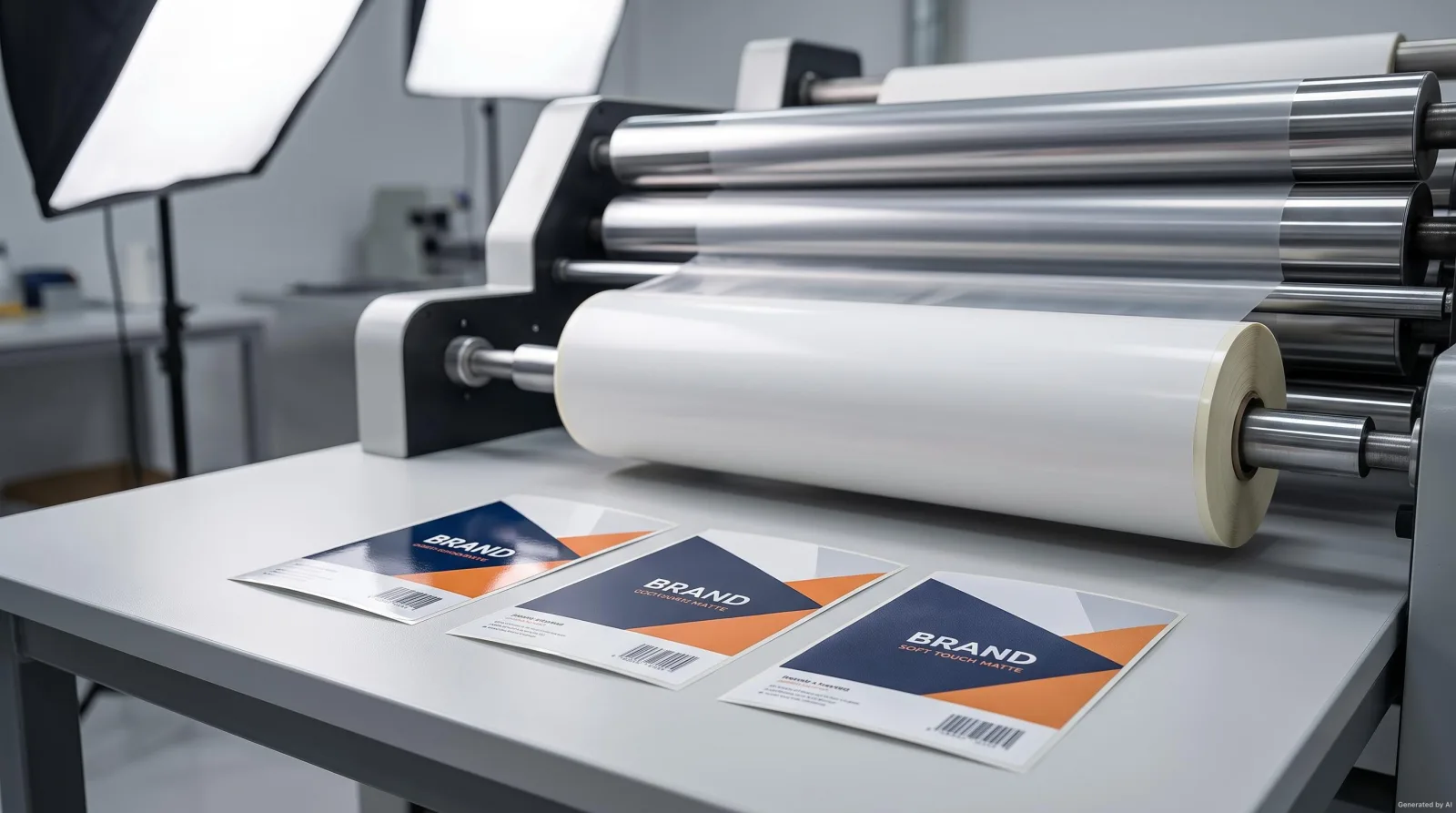
Lamination is usually applied as a post-print process: the printed label roll or sheet is run through a unit of the printing press or a separate laminating machine with a transparent film wound onto it. The film is fixed to the surface with heat and pressure or with an adhesive.
Liquid varnish is usually applied during printing, in a coating unit of the press or on a separate coating line. The varnish is spread evenly over the surface and then dried or cured with UV light. In both methods, the cleanliness of the surface, the homogeneity of the application thickness and the drying/curing conditions determine the quality of the result.
Cost and aesthetic impact
Protective coating is one of the items that affect the label's unit cost. Lamination is usually more expensive than liquid varnish because it requires extra film material and a separate process. Soft-touch and some special textured coatings can cost more than standard matte and gloss options. As the run length increases, the unit cost usually decreases.
Aesthetically, coating is one of the strongest tools that define a label's character. The same design looks vivid and bold with gloss, plain and sophisticated with matte, and touchable and exclusive with soft-touch. The coating decision is therefore about brand perception as well as protection. For cost, see our articles on factors affecting label cost and how label printing cost is calculated.
Sector-specific use examples
Cosmetics and personal care: Premium perception is key. In the luxury segment gloss or soft-touch lamination is common; a soft-touch surface gives an exclusive feel when touched. Minimal brands choose matte coating.
Beverages and bottle labels: Because bottles stay in the refrigerator and in humid conditions, moisture-resistant protection matters. Gloss stands out for large-scale and vivid designs, matte for boutique and craft production.
Chemical and technical products: In packaging containing detergent, cleaning products and solvents, chemical resistance and abrasion resistance come first. Durable laminations are preferred in this group.
Outdoor applications: For labels exposed to sun, rain and temperature difference, UV resistance and water resistance are decisive. To look at this in more detail, see our article on labels resistant to water, moisture and outdoor conditions.
Durability tests
The real performance of a protective coating can be assessed with simple tests carried out in the laboratory or on the production line. The aim is to see how the coating behaves under the product's real use conditions. Common approaches are:
- Scratch/abrasion test: observing wear by rubbing the surface with an object or rubbing it firmly by hand.
- Water and moisture test: immersing the label in water for a set time or keeping it in a humid environment such as a refrigerator.
- Chemical test: applying alcohol, oil or detergent to the surface, waiting, then wiping to assess staining.
- Light/UV test: keeping the sample under sunlight or strong lighting for a set time and monitoring colour change.
- Adhesion and edge test: checking whether the coating and film lift or separate over time.
These tests do not replace standardised laboratory methods, but they offer a practical and quick way to choose the right coating. For a concrete assessment, working on samples that reflect your product's real conditions is the most reliable approach.
Lamination selection checklist
- In what environment and for how long will the label be used?
- Is there a risk of scratching, abrasion or wear?
- Is there moisture, water, drips or a refrigeration condition?
- Will there be contact with alcohol, oil, detergent or solvent?
- Will the product be exposed to sunlight/UV outdoors?
- Would visible fingerprints or smudges be a problem?
- Is barcode, QR code or small-text readability critical?
- Will laser printing or writing be applied to the product later?
- Aesthetic goal: gloss, matte or a tactile feel?
- Which method (film/varnish) do the run length and budget allow?
- Have scratch, moisture and readability been tested on a sample?
- Are the coating, adhesive and surface compatible together?
A realistic use case
A mid-sized cosmetics producer wanted to prepare a premium label for a face cream. The first label had gloss lamination and looked very striking in the window. But on products held by the lid edges, fingerprints stood out; under the strong in-store lighting part of the label produced glare and the product name was sometimes hard to read.
The producer tested the same design in three variants: gloss, matte and soft-touch. Soft-touch was chosen for the window and gift boxes, matte coating for the shelf products. This gave both a premium look with an exclusive feel when touched and a legible surface on the shelf that did not glare and hid fingerprints. This example shows that a single coating may not suit every point of sale; the coating decision should be based on where it is used.
Conclusion and practical recommendations
A protective coating is an important decision that determines both the life and the perception of a label. The right coating protects the surface from factors such as scratching, moisture, chemicals and UV, safeguards readability and gives a look suited to the brand. The wrong choice can lead to a label that wears quickly, stains or is hard to read.
When deciding, focus on three questions: where and under what conditions will the label be used, what level of protection is needed, and what visual/tactile effect does the brand want? Once these are clear, you can decide comfortably between lamination and liquid varnish, and then between matte, gloss and soft-touch options. For your design and material decisions, our articles on matte vs gloss labels: which one is right, coated paper versus film labels and industrial labels: material selection for demanding conditions can guide you.
Let us define the right protective coating for your product together
Every product has a different use condition, readability need and aesthetic goal. The right coating ensures both a strong first impression and staying clean and legible throughout the product's shelf life. Share your product type and storage/use conditions, and we will determine together whether lamination or liquid varnish suits you and which surface finish we recommend. You can browse our range on the products page, or reach us through the request a quote page for a quick assessment.
Frequently Asked Questions
Is lamination or liquid varnish more durable?
Because lamination adds a separate film layer, it usually offers higher mechanical and moisture resistance than liquid varnish. Liquid varnish provides thinner and more economical surface protection and can be preferred when the protection need is low.
Does soft-touch lamination show fingerprints?
Soft-touch surfaces give a silky feel but can show fingerprints and smudges more easily than matte or gloss surfaces. This should be assessed for heavily handled products.
Does lamination affect barcode readability?
Yes. Gloss lamination can create glare and make a barcode harder to read; matte or semi-matte coatings are generally safer. For critical applications, testing a sample with the actual reader is recommended.
Does the coating matter for a label that will be laser printed?
It does. Some smooth or slippery coatings can affect how toner and ink adhere. The coating should be tested together with the printer and consumable to be used.
Does a protective coating increase cost?
Yes, coating increases the unit cost. Lamination is usually more expensive than liquid varnish, and soft-touch and special textured coatings cost more than standard options; the unit cost drops as the run length increases.
Want to Determine the Right Label for Your Product?
Share your usage area and needs with us; let's evaluate suitable options together.