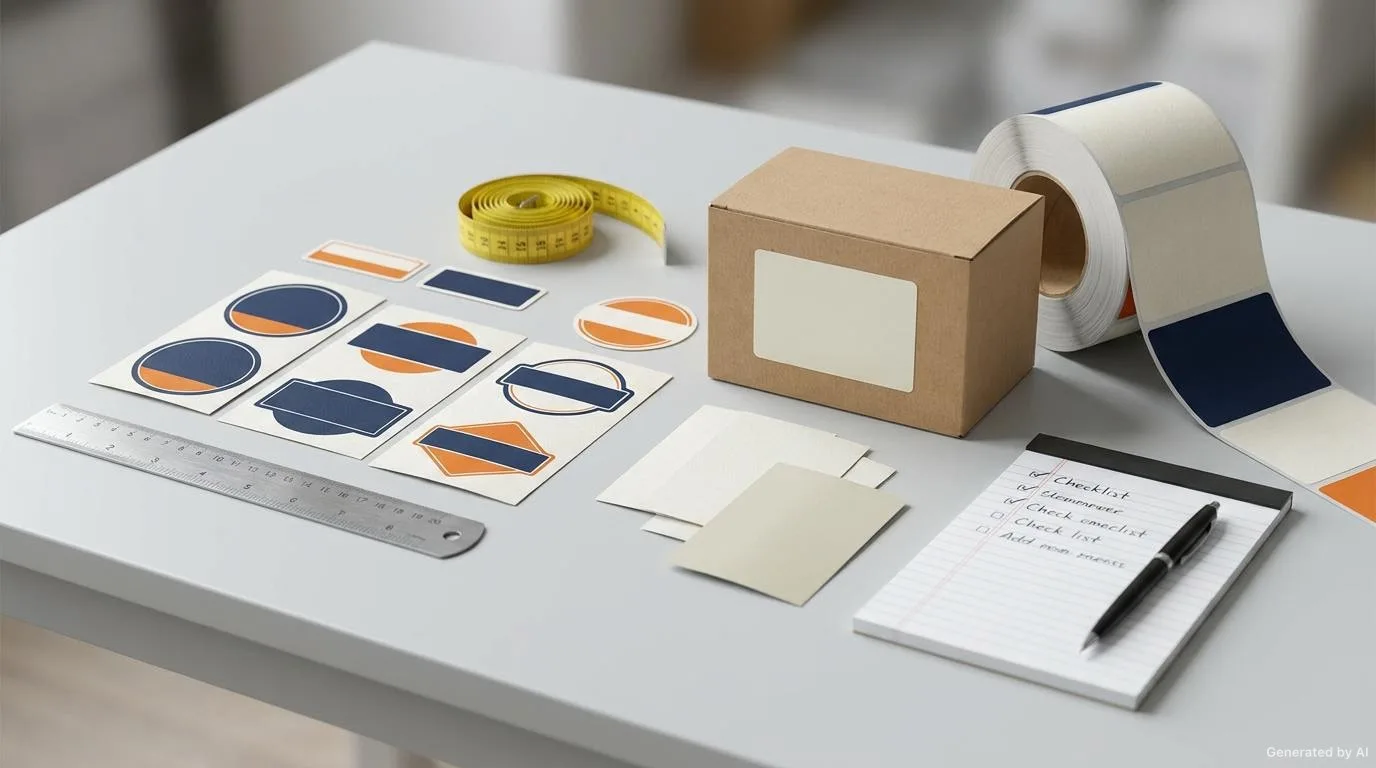
Factors Affecting Label Cost
We examine the factors that determine label cost, such as material and adhesive selection, size and quantity, winding direction, number of colours, printing technology, die and cutting, run length and waste, and the correct ways to reduce cost.
Label price does not consist of a single item. The cost of a label is made up of many interacting elements such as the material used, quantity, size, printing method, die and winding layout. A large part of the difference between prices obtained from different suppliers for the same product comes from interpreting these elements in different ways.
In this article we examine the main factors affecting label cost under headings from material and adhesive selection to printing technology, and from run length to waste. Our aim is to show balanced ways to reduce cost while preserving quality and usability. Aiming only for the lowest unit price can often lead to a higher total cost throughout the process.
The main components that make up cost
The total cost of a label consists broadly of three main groups: material cost, printing and converting cost, and setup cost. The material group covers the face stock, adhesive and liner. The printing and converting group includes printing, cutting, slitting and winding. The setup group covers one-time items such as the die, print setup and samples.
The weight of these three groups varies according to the application. In a custom low volume job the setup cost comes to the fore, while in a standard high volume job the material cost is decisive. Cost assessment therefore cannot be made without knowing the quantity and the use scenario.
Material and adhesive selection
Material is the most visible item of label cost. The price difference between paper, film, metallised or clear surfaces is clear. What really matters, however, is whether the chosen material suits the life of the product. A material that is more durable than necessary creates unnecessary cost, while an insufficient material increases the risk of relabelling and returns.
Adhesive selection also affects cost. Special adhesives developed for cold, damp or oily surfaces may be more costly than standard adhesives. Nevertheless, a wrong adhesive can increase total cost by causing labels to fall off in the field and leading to lost labour. To examine the subject in more detail our article on technical questions when choosing label material can be a helpful guide.
Liner and carrier selection
The label liner or carrier film is also part of the cost. Thin liners save material, but very thin liners can cause difficulties during cutting and winding. Liner selection should be evaluated together with the application method.
Size and quantity
The size of the label directly determines the amount of material used. As the label area grows, fewer labels come from the same roll and the unit cost rises. The label size should therefore be planned as efficiently as possible according to the information to be carried and the readability requirement.
Quantity determines over how many labels the setup cost is spread. The same die and print setup is spread over few labels at low volume and over many labels at high volume. Unit cost therefore usually falls with increasing quantity. However, a run that exceeds demand may not deliver real savings due to unused stock and waste.
The advantage of standard sizes
Standard sizes that fit existing cutting dies can eliminate the new die cost. If a fully custom size is required, the die cost is added to the total price. Staying within standard size limits wherever possible reduces cost.
Winding direction and roll layout
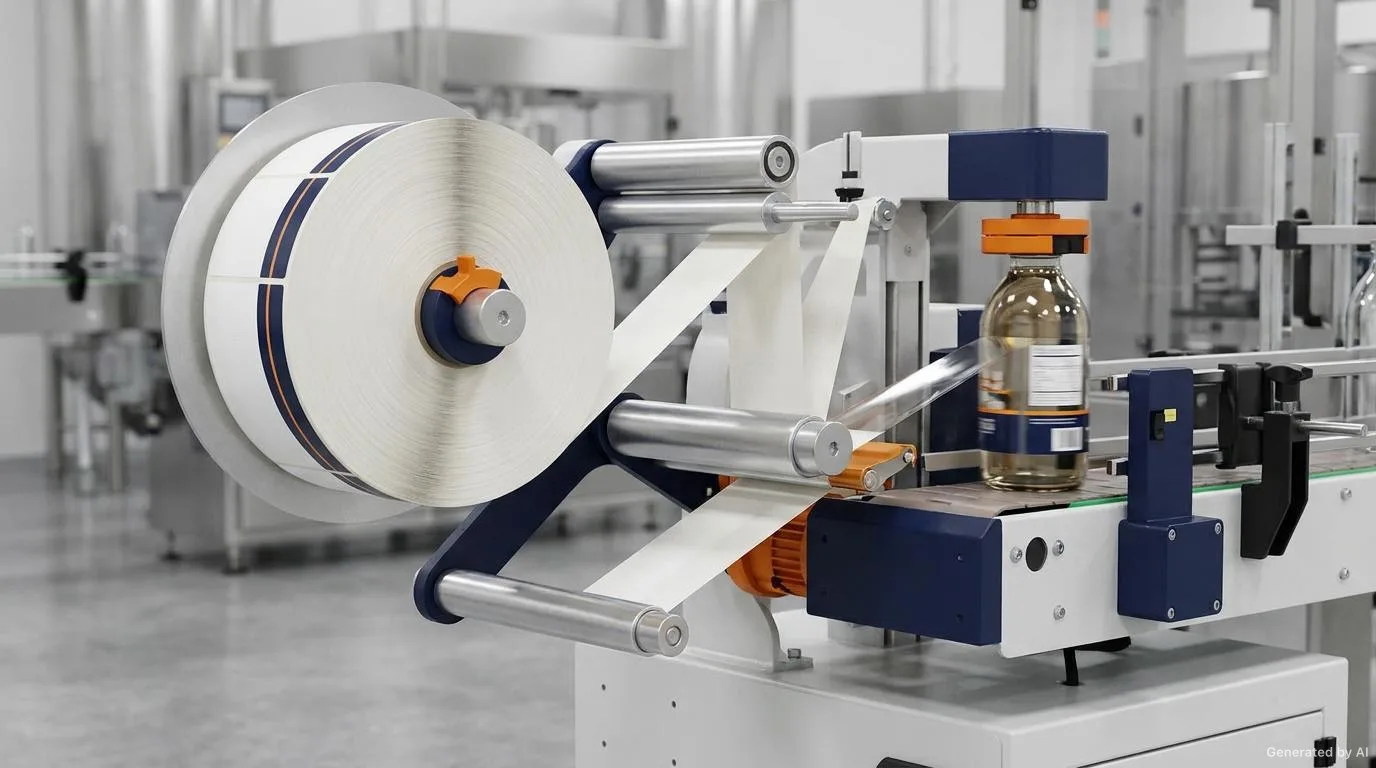
The winding direction determines the orientation of the label on the roll and how the reel is wound. While this choice does not directly change the printing cost, it affects application speed and the amount of waste. If the winding direction is chosen incorrectly for a line that applies labels by hand or by machine, the operator may have to turn the label over, which creates lost time and the risk of error.
The roll layout and reel diameter should suit the capacity of the application machine. A mismatched reel can cause jamming in the machine or frequent reel changes. Clarifying these details before ordering improves process efficiency and prevents disruptions during application.
Number of colours and printing technology
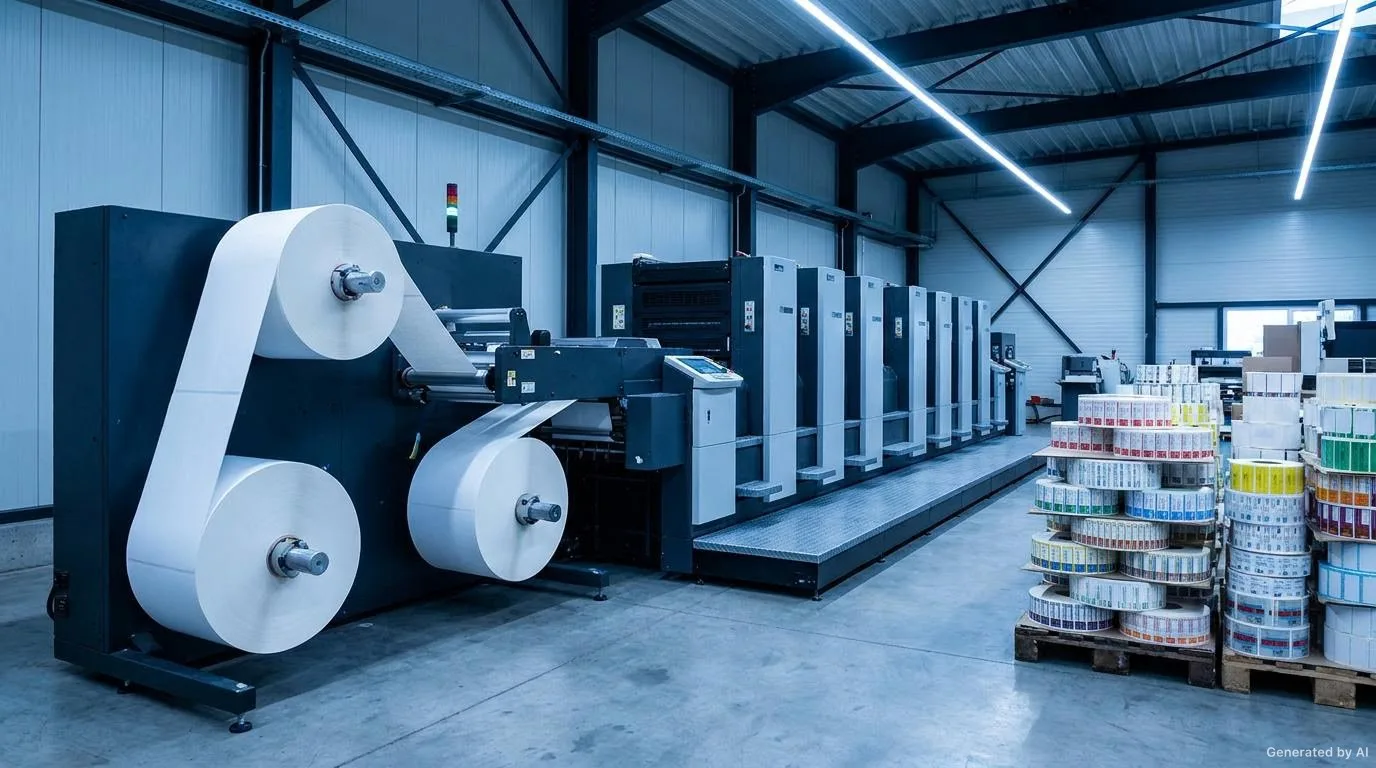
Printing technology is an important factor that determines the cost structure. Methods such as flexo and offset become economical at high volumes, while digital printing offers flexibility at low and medium volumes. In digital printing there is no or very little die cost, but the unit cost falls slowly as the quantity increases. The right technology should therefore be chosen according to the quantity range.
As the number of colours increases, print setup and consumable needs may rise. Each additional colour may require a separate printing unit and adjustment. Special colours (spot colours) may be necessary for a particular look, but simplifying the colour palette wherever possible can reduce cost.
Surface treatments and coatings
Varnish, lamination or special textured coatings give the label durability and a premium look, but on the other hand they increase cost. Such treatments should be considered only if the conditions the product will meet genuinely require them.
Die, cutting and finishing
The die is an element that determines the shape of the label and usually carries a one-time cost. Ready dies can be used for standard shapes, while custom shapes require a new die. The die cost falls per label at high volumes and remains noticeable at low volumes.
Finishing operations such as cutting, slitting and, where required, perforation are also added to the cost. As the number of these operations increases, the converting cost rises. Simplifying the design and avoiding unnecessary finishing operations can reduce total cost.
Run length, reprinting and setup cost
The run length decision is at the centre of the cost balance. Because setup and die costs are one-time, producing the same job in a single high run reduces unit cost. However, reprint flexibility is lost. In contrast, working with smaller runs during unpredictable demand changes reduces stock and waste risk.
A balance must be struck between these two approaches. A realistic run length should be set considering the product life, estimated sales and shelf life. When reprinting is involved, storing the previous print information can shorten the setup process again.
Waste and quality control
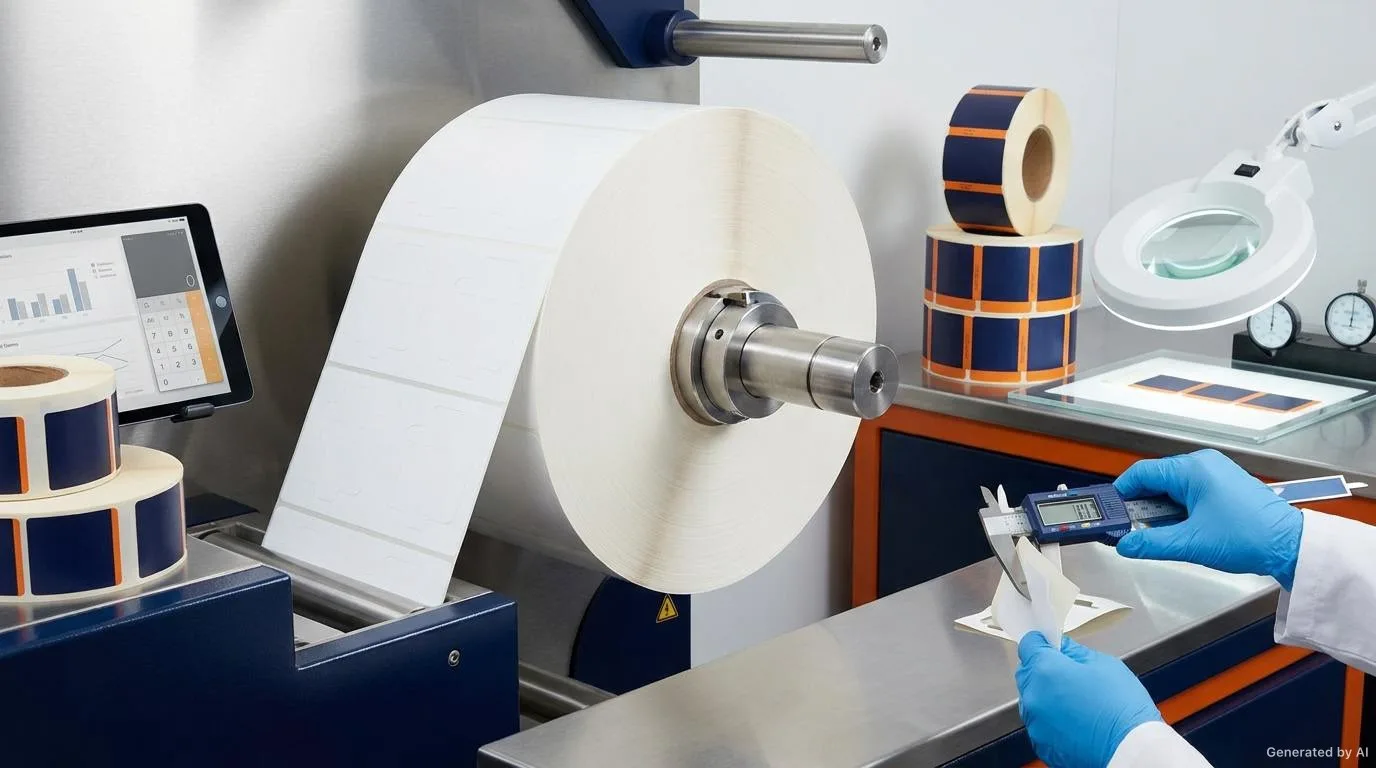
Waste is an item that increases cost invisibly. Waste created during print setup, cutting errors and labels lost during application are reflected in total cost. Correct printing parameters and consistent quality control improve unit cost by reducing waste.
Waste during application often stems not from the label itself but from a mismatched material or a wrong adhesive. Testing the material and adhesive selection with a sample therefore helps prevent hidden costs from the start.
Cost factors comparison table
The table below summarises in which situation the main cost factors increase cost and which approach can save. The effects may vary according to the application.
| Factor | Situation that increases cost | Approach that saves |
|---|---|---|
| Material | More durable surface than needed | Material suited to the usage condition |
| Adhesive | Insufficient adhesive, relabelling | Adhesive suited to the surface |
| Size | Unnecessarily large area | Efficient size plan |
| Quantity | Low volume, setup not spread | Realistic run length |
| Die | Custom shape, one-time cost | Use of standard size |
| Number of colours | Many special colours | Simplified colour palette |
| Printing technology | Method not suited to the volume | Technology suited to the quantity range |
| Waste | Uncontrolled process | Samples and regular quality control |
The total cost of ownership approach
Focusing only on the unit price when assessing label cost can be misleading. The total cost of ownership approach evaluates unit price together with ease of application, relabelling rate, waste, return risk and label life. Sometimes a durable label with a slightly higher unit price can be more economical by causing fewer problems throughout the process.
For example, reapplying by hand the labels that fall off because of a cheap adhesive may look like a saving in the short term but can be expensive in terms of labour and time. Similarly, a barcode that loses readability quickly can slow down the entire logistics flow. The cost decision should therefore be made with the whole operation in mind.
The correct ways to reduce cost
The healthiest way to reduce cost is to eliminate unnecessary items without sacrificing quality. Planning the size according to need, benefiting from standard dies and simplifying the colour palette are the basic steps of this approach. Choosing the material and adhesive according to the usage condition reduces both unnecessary cost and hidden waste.
Setting a realistic run length and choosing the suitable printing technology also deliver clear savings. If demand is uncertain, starting with smaller runs and reprinting when needed can keep the balance. Sharing the correct information at the quotation stage prevents surprise costs. Our article on the quotation preparation checklist for the right label solution will be helpful in this regard.
Checklist
- Have you determined the usage conditions of the label (moisture, heat, abrasion)?
- Are the material and adhesive suited to these conditions?
- Is the label size efficient for the information carried?
- Can a standard size or ready die be used?
- Do the winding direction and roll layout suit the application method?
- Are the number of colours and the coatings genuinely necessary?
- Is the chosen printing technology suited to the quantity range?
- Is the run length realistic for the expected demand?
- Has the risk of waste and relabelling been assessed?
- Has a surface and adhesive test been carried out with a sample?
Conclusion
Label cost consists not of a single figure but of a series of interacting decisions. When material and adhesive, size and quantity, printing technology, die, run length and waste are evaluated together, cost is understood more accurately. The lowest unit price is not always the most economical solution; what matters more is giving the most balanced result for the whole operation.
The right approach is to remove unnecessary cost items while preserving quality and usability. If you would like to clarify the cost and performance balance for your own products, you can share your usage conditions and quantity expectation and request a technical assessment and sample support from us via our label solutions.
Frequently Asked Questions
Which factor affects label cost the most?
Material and adhesive selection, size and quantity, printing technology and setup costs are the most decisive factors. Their impact varies according to the application.
Is a higher run always cheaper?
The unit cost usually falls with increasing quantity, because setup and die costs are spread over more labels. However, a run that exceeds demand can create stock and waste cost.
How does the number of colours affect cost?
Each additional colour can increase print setup and the material used. Simplifying the design for the intended printing method can reduce cost.
Why is the winding direction related to cost?
The winding direction and roll layout affect application speed. When chosen incorrectly, manual application slows down and waste can increase.
What does total cost of ownership mean?
It means evaluating together not only the unit price but all costs arising throughout the process, such as ease of application, relabelling, waste and durability.
Want to Determine the Right Label for Your Product?
Share your usage area and needs with us; let's evaluate suitable options together.