Quote Preparation for the Right Label Solution: Customer Checklist
Information to prepare for a label quote: type, surface, dimensions, usage environment, quantity, printing and material. A comparison table and customer checklist.
To get an accurate label quote, you need to communicate your needs clearly and completely. Missing or incorrect information prolongs the quoting process and can cause production issues. In this article, we will cover the information and checklist you need to prepare for quote preparation for the right label solution.
A label is an investment, and the investment paying off depends on the quality of the information at the start. A photo, a surface detail or a temperature range shared at the quoting stage directly affects the choice of material, adhesive and printing method. The clearer the information you provide, the more accurate the quote and the more predictable the process.
Information That Speeds Up the Quote Process
Preparing the following information for quoting speeds up the process considerably. It helps to consider each heading together with why that information is needed.
1. Label Type and Purpose
- What product will the label be used for?
- What is the function of the label? (Brand, information, barcode, warning, etc.)
- Indoor or outdoor use?
The function of the label determines the design priorities. In logistics, for example, barcode legibility comes first, while in premium cosmetics the surface feel and print quality stand out. The indoor and outdoor distinction is directly related to material and adhesive durability.
2. Product and Surface Information
- Product photo (if available)
- Surface the label will be applied to (glass, PET, cardboard, PE/PP, etc.)
- Surface shape (flat, curved, rough)
The adhesive choice changes when the surface material is glass, PET, PE/PP or cardboard. Rougher surfaces or those with low surface energy behave differently in terms of adhesion, so describing the surface as clearly as possible makes it easier to choose the right product on the first attempt.
3. Dimensions and Shape
- Label width and height (mm)
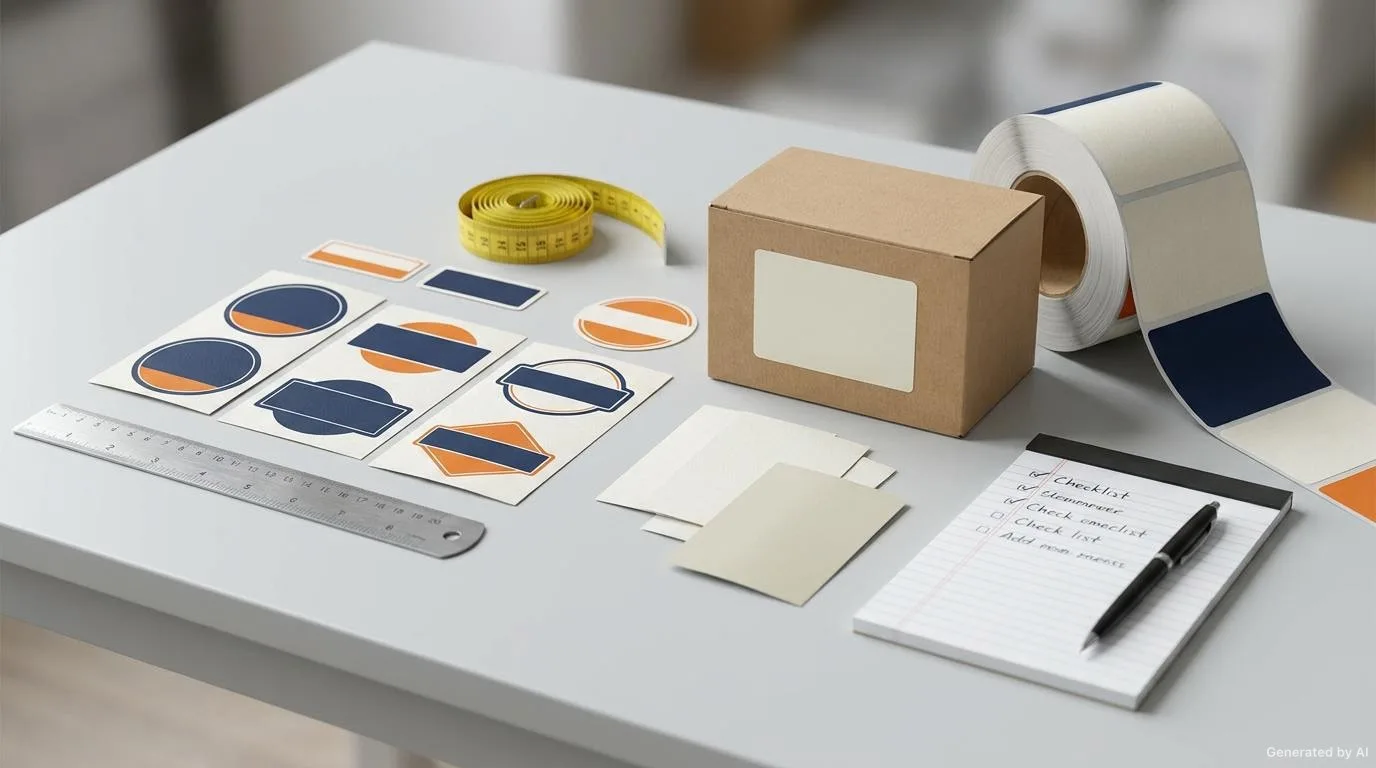
- Label shape (rectangular, round, oval, custom die-cut)
- Scale appropriate to the surface
The dimension decision should be based on the application surface. Very wide labels on curved surfaces can lift at the corners; in such cases the dimension and the layout should be assessed together. If a custom cut is needed, it helps to know from the start that this may require a die and is related to the quantity.
4. Usage Environment Conditions
- Temperature range (storage, transport, shelf)
- Humidity or water contact
- Chemical contact (if any)
- UV / outdoor exposure
Temperature, humidity, chemical contact and UV exposure are the core inputs for the material and adhesive choice. The more clearly you specify these conditions, the more accurate the quote. For example, a label used in a cold chain and a label that will sit in a warm display window may not be solved with the same material.
5. Quantity and Delivery
- Total label quantity
- Labels per roll (if roll labels)
- Delivery time expectation
The quantity affects the choice of material, die and printing method; digital approaches may stand out for low quantities and different ones for high quantities. On roll labels, the number per roll determines the packaging and the application method. The delivery expectation, in turn, guides production planning.
6. Printing Information
- Design file (if available, print-ready)
- Number of colours (CMYK, Pantone, single colour)
- Preferred printing method (if any)
- Surface finish (matte, glossy, soft touch)
The number of colours and the printing method determine the balance between cost and appearance. If you have a ready design file, we can check its print suitability together; if not, we can proceed with the dimension and usage information and also offer design support. The surface finish is another preference that affects the tactile feel and durability.
7. Material and Adhesive Preference
- Preferred label material (if any)
- Adhesive type (permanent, removable, freeze-resistant, etc.)
- Transparent, white or metallic label preference
It is fine if you have no preference; we can determine the suitable material and adhesive together according to your usage conditions. What matters is knowing which need your preference arises from. A transparent or metallic preference, on the other hand, directly affects the design decisions.
8. Existing Sample (If Any)
An existing label sample or a similar product label is very valuable for understanding expectations. If available, it should certainly be shared.
A sample is the fastest way to convey the expected appearance, texture and adhesion behaviour. If you have an old label, the material and adhesive type on it is also a valuable clue for the quote.
Quote Priorities by Industry
Label needs vary by industry. The same dimensions and quantity can lead to a different material and adhesive decision in different sectors. Below are a few common scenarios and the information that stands out in quote preparation.
Food and Beverage
On food labels, the moisture and temperature changes that occur during transport and storage are decisive. For products used in the cold chain, adhesives that still hold at low temperatures require that refrigerator or freezer conditions be stated clearly during quoting. Whether the product surface is greasy or damp also affects adhesion behaviour.
Cosmetics and Personal Care
In cosmetics, the appearance and surface feel of the label stand out. Transparent or metallic preferences and matte or glossy finishes directly affect brand perception. On small bottles and tubes, the design and material should be assessed together so that fine details remain legible.
Logistics and Shipping
In logistics, barcode legibility and fast application come first. The roll preference, labels per roll and the application method (manual or automatic) should therefore be stated clearly. For high quantities, economical printing methods may stand out.
Chemicals and Industrial Products
For products exposed to chemical contact, oil and solvents, durable material and adhesive selection is critical. In such applications, the type of chemical and the contact duration are headings to focus on in quote preparation.
Information That Speeds Up or Slows Down the Quote
The following table shows the difference between providing a piece of information clearly and providing it incompletely, through the process. The aim is to help you see which headings you should prioritise.
| Information | When Provided Clearly | When Missing |
|---|---|---|
| Product and surface | The right material and adhesive are selected quickly | Wrong product trials and return risk |
| Dimensions and shape | A precise price and die decision become easier | The quote stays general and needs later revision |
| Usage environment | Durability is planned from the start | Blistering or colour fading in a short time |
| Quantity and roll | An economical printing method is chosen | Unit cost is calculated incorrectly |
| Print and colour | The appearance expectation matches | Colour surprise and reprinting |
| Material preference | The need is met correctly | An unsuitable alternative is suggested |
| Existing sample | The expectation is understood quickly | Correspondence drags on, more trials |
Order of Collecting Information: A Practical Path
Rather than gathering information in a scattered way, following the order below makes the work easier for both you and the quoting team.
- Describe the product and the surface with a short explanation and, if possible, a photo.
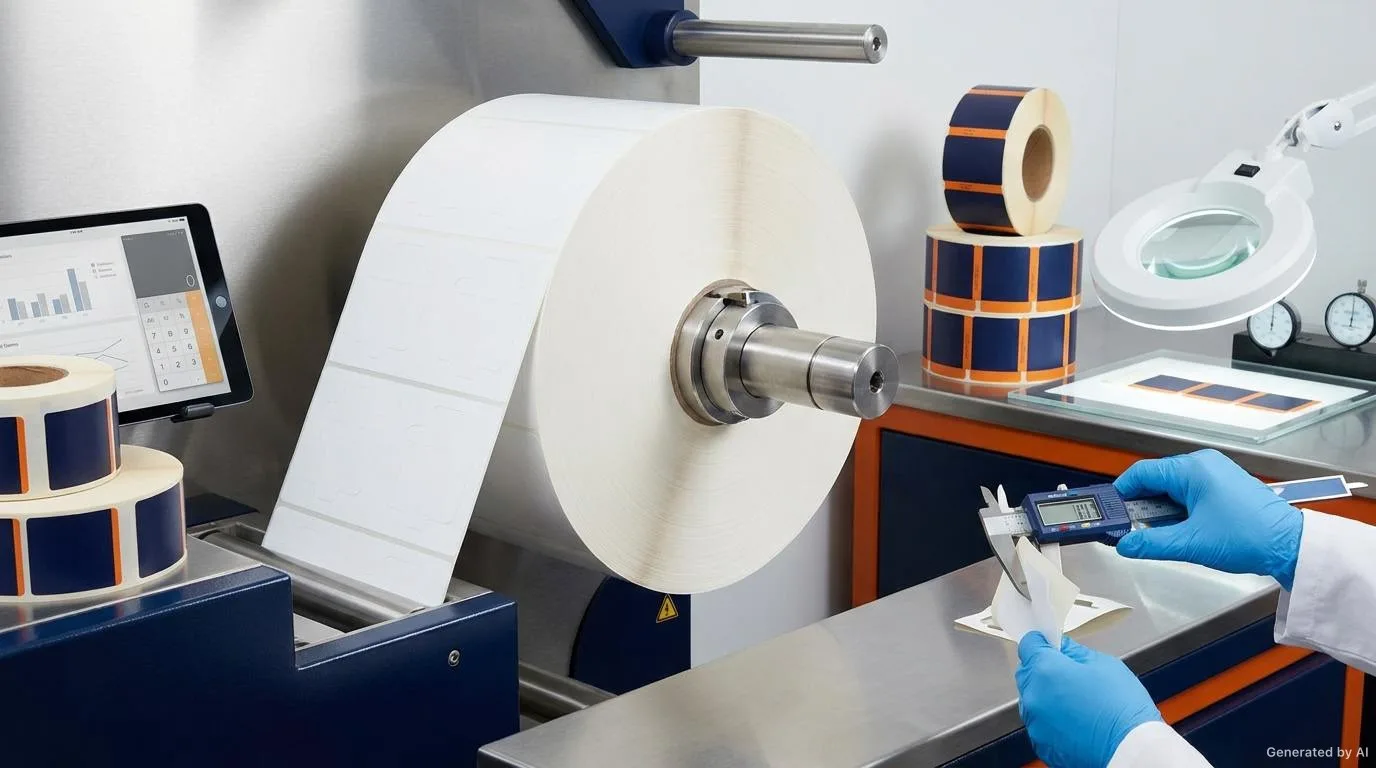
- Verify the dimension on the product if possible and note it down.
- State the usage environment (temperature, humidity, chemical, UV) in writing.
- Share the estimated quantity and your roll preference.
- Provide your design file and colour preferences if you have them.
- Mention an untouched sample if you have one.
- If you have no preferences, say so clearly; we can determine them together.
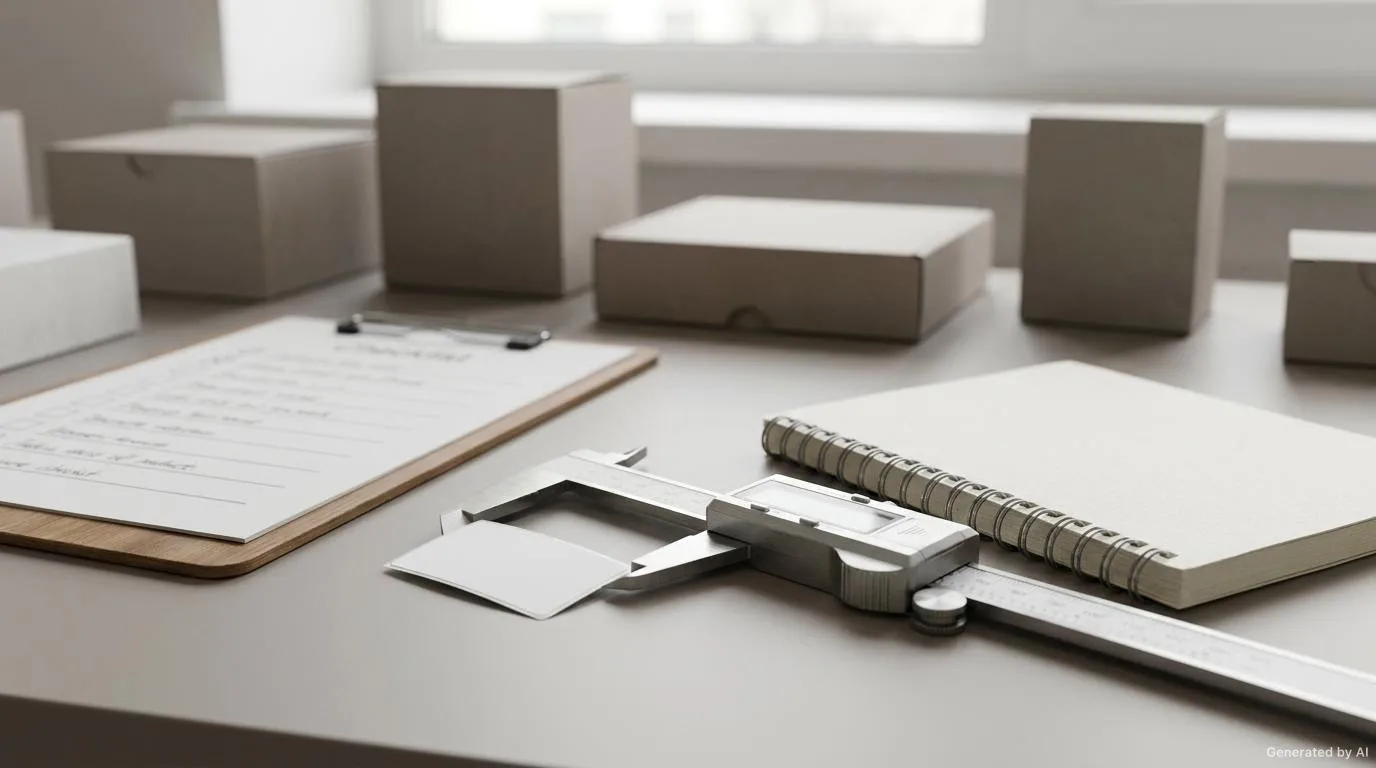
Downloadable Checklist
The checklist you can use in quote preparation:
- Product name and purpose are defined.
- The surface the label will be applied to is identified.
- The label dimension (width x height) is determined.
- The usage temperature range is determined.
- Moisture and chemical contact are specified.
- The total label quantity is determined.
- Labels per roll and roll preference are stated (if any).
- The design file is ready (print-suitable).
- Colour and surface finish preferences are determined.
- The material and adhesive preference is stated (if any).
- An existing sample is shared (if any).
- The application method (manual or automatic) is stated.
Common Mistakes When Preparing a Quote
Most delays caused by missing information arise from a few recurring habits:
- Giving the dimension as an estimate and not verifying it on the product.
- Dismissing the usage environment with general phrases (saying normal conditions).
- Not stating the quantity clearly and making budget comparison difficult.
- Not sharing an existing sample and describing the expectation only in words.
- Limiting the colour expectation to the colour seen on screen.
- Acting as if there is no preference while actually expecting a specific look.
The common point of these mistakes is that they are easily corrected at the quoting stage but become costly at the production stage. For this reason, filling in the checklist eases not only the quoting process but also the subsequent production process.
Conclusion
An accurate label quote starts with complete and correct information. Using this checklist, you can speed up the quoting process and communicate your expectations clearly. For unknown topics, our expert team can guide you. For the technical details of material selection, see our article on choosing a material, and for pre-order preparation, see our roll label ordering guide.
Let us determine the most suitable label solution for your product together. Sharing your information is enough; we can evaluate the suitable material, printing and finish options and guide you. Reach us through our label solutions page.
Frequently Asked Questions
Which information is most critical for a quote?
The application surface and the usage environment are the most critical, because they directly determine the material and adhesive choice. A clear surface and environment description greatly improves the accuracy of the quote.
Can a quote be given without dimensions?
It can be given for a general idea, but a precise price and the right material choice require the dimension to be verified on the product. If the dimension is unclear, stating this clearly during quoting makes the process easier.
Why is the usage environment asked about?
Temperature, humidity, chemical contact and UV exposure determine durability and therefore influence the material and adhesive choice. Specifying these conditions prevents field problems from the start.
What if I do not have a design file?
That is no problem; we can proceed with the dimensions and usage information and offer design support. What matters is that the product, surface and usage information are clear.
Why is an existing sample useful?
A sample is the fastest way to convey the expected appearance, texture and adhesion behaviour. If you have an old label, the material and adhesive type on it is also a valuable clue.
Want to Determine the Right Label for Your Product?
Share your usage area and needs with us; let's evaluate suitable options together.