Things to Know Before Ordering Roll Labels
Label dimensions, wind direction, core diameter, outer diameter, label quantity and equipment compatibility. Pre-order technical checklist, scenarios and comparison.
Determining the correct technical details before ordering roll labels is critical for smooth production and cost optimization. Incorrect or missing technical information can lead to production downtime, reprints or cost increases. In this article, we will cover the technical information you need to know before ordering roll labels, section by section.
1. Label Dimensions
Label width and height should be specified in millimeters. Dimensions are determined by the surface to be labeled and the information to be carried. Incorrect dimensions cause the label to not fit properly or information to not fit.
Points to Consider When Determining Dimensions
- The size of the area reserved for the label on the surface
- The minimum legibility required for text, logo and barcode
- Application tolerance and edge margins
2. Wind Direction
The direction of labels on the roll is determined by the requirements of the labeling machine. Wind direction determines which way the label feeds into the machine. Incorrect wind direction can cause the labeling machine to apply labels incorrectly. Learn the correct wind direction from your machine technical manual.
Common Wind Directions
| Wind Direction and Type | Description | Suitable Case |
|---|---|---|
| Inward winding | The label face looks toward the inside of the roll | Depending on the machine feeding layout |
| Outward winding | The label face looks toward the outside of the roll | Depending on the machine feeding layout |
Which direction is correct depends entirely on your machine feeding layout; therefore the machine manual or an existing label sample should be used as a reference.
3. Core Diameter
The diameter of the cardboard or plastic core inside the label roll. Common core diameters are 25 mm, 40 mm and 76 mm, and they must be compatible with your labeling machine core diameter. Incorrect core diameter prevents the roll from being mounted.
Which Core Diameter Should Be Chosen?
The core diameter should match your machine shaft size directly. Smaller cores can be used in manual applications, while larger cores are generally preferred on automatic lines.
4. Outer Diameter
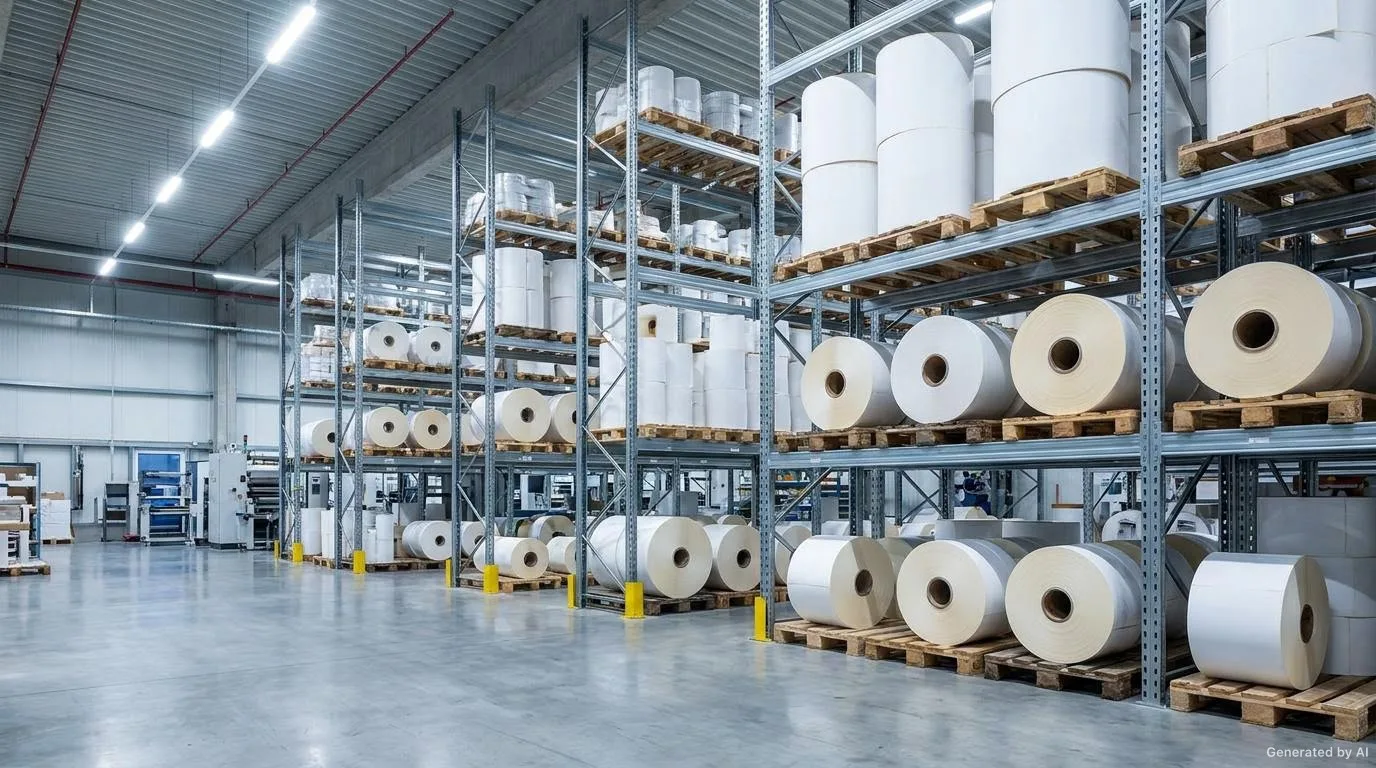
The total outer diameter of the roll, and it must not exceed the maximum roll diameter your labeling machine accepts. Outer diameter depends on label quantity, gap and material thickness. Check your machine maximum roll diameter.
The relationship between outer diameter and label quantity directly affects the order amount. Rolls that are too large do not fit the machine; rolls that are too small require frequent roll changes.
5. Label Quantity and Gap
- Label quantity: Number of labels per roll, determined by production volume and inventory management.
- Gap: Space between two labels, required for the machine to detect label separation. Typically 2-3 mm, but varies by machine requirements.
Balancing Quantity and Gap
As the label quantity increases, the roll outer diameter grows, which can push machine capacity. The gap, on the other hand, is critical for the sensor to detect the label correctly.
6. Printing and Equipment Compatibility
Label material and adhesive must be compatible with your labeling equipment:
- Is the machine transport system (vacuum, mechanical) compatible with the label material?
- Is the printing method (flexo, digital, thermal) suitable for the material?
- Is application speed compatible with the label adhesion time?
Impact of Material and Adhesive Choice on the Order
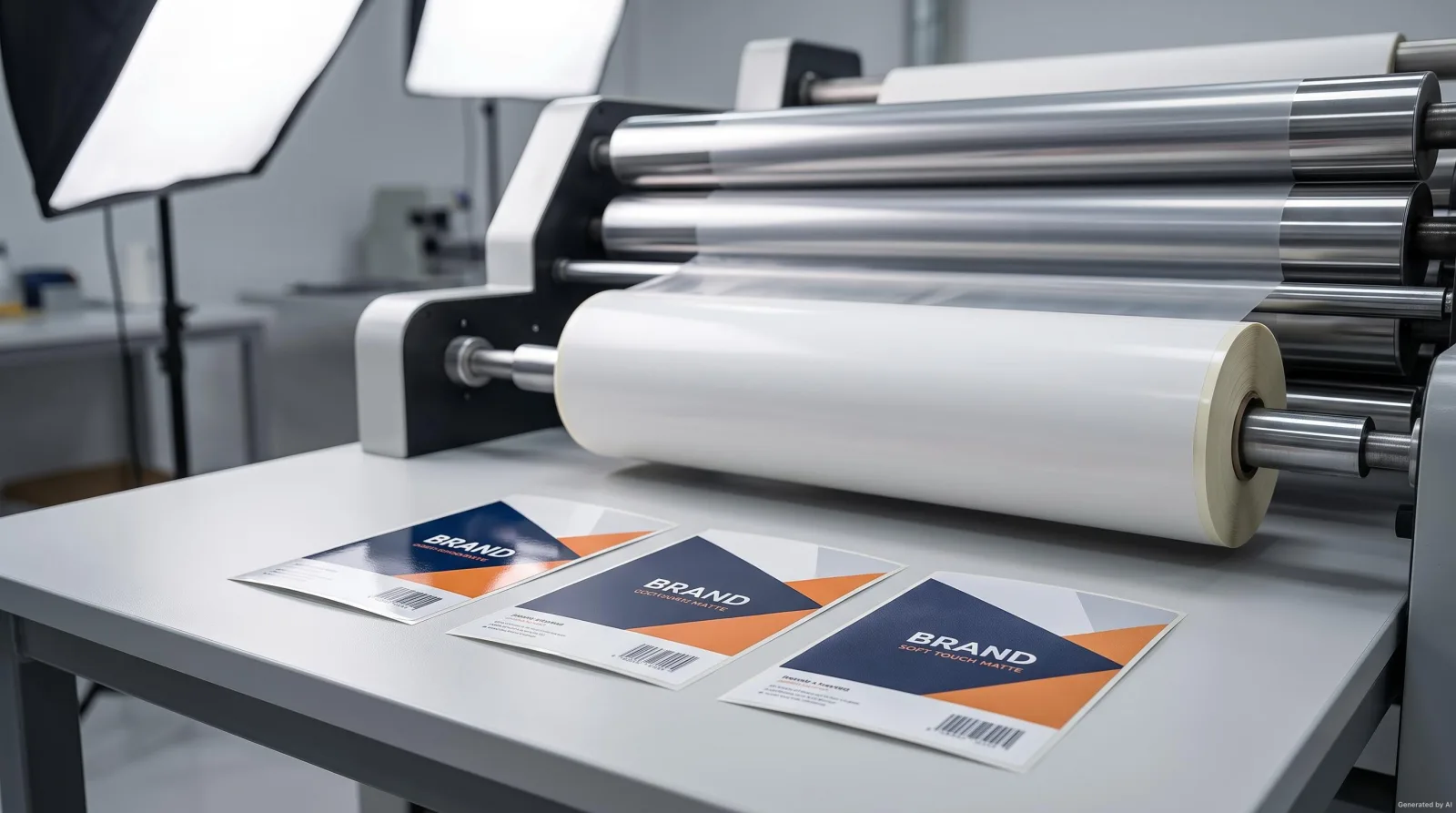
Label material and adhesive type are an inseparable part of the ordering process. The surface, ambient conditions and service life determine which material and adhesive are suitable. For example, a label used outdoors and a label used indoors for a short time do not require the same material. For a more detailed comparison, you can read our article on the coated paper and film label comparison.
Real Order Scenarios
To see how the technical details come together, let us look at a few typical ordering scenarios:
Scenario 1: High-Volume Production on an Automatic Line
If the order is placed for an automatic labeling line, core diameter, maximum roll outer diameter and wind direction are of great importance. If any of these is wrong, the line can stop or the label can be applied incorrectly.
Scenario 2: Manual Application
In manual application the machine constraints are more flexible; however dimensions and adhesive selection remain critical. For user experience, rolls that open easily and are wound neatly are preferred.
Scenario 3: Small Batch and Trial
If a new product or a new surface is being tested, ordering a small batch reduces risk. This way the dimensions, wind direction and adhesive behavior can be verified before moving to production scale.
Pre-Order Technical Information Checklist
- Label width and height (mm)
- Wind direction (per machine requirement)
- Core diameter (mm)
- Maximum roll outer diameter (mm)
- Labels per roll
- Gap between labels (mm)
- Label material and surface finish
- Adhesive type
- Printing method and color count
- Labeling machine brand and model
- Application surface and conditions
- Expected service life and ambient conditions
- Existing label sample, if any
Order Quantity and Cost Relationship
In a roll label order, quantity affects not only the production volume but also preparation, printing and cutting costs. Determining the right quantity matters for both budget and stock management.
Preparation and Tooling Costs
Depending on the printing method, fixed costs such as tooling, setup or digital preparation may arise. When these costs are divided across the total order quantity, the share per label decreases as the quantity increases. For this reason, unit cost can appear relatively high in very small quantities.
How Does Unit Cost Change as Quantity Increases?
| Order Approach | Preparation Impact | Unit Cost Trend | Suitable Use |
|---|---|---|---|
| Very small batch | High preparation share | Relatively high | Sample and trial |
| Medium batch | Balanced | Medium | Regular production |
| High quantity | Low preparation share | Relatively low | Series production and stock |
Still, deciding only on quantity is not right; storage conditions, service life and possible product changes also affect total cost.
Sample and Approval Process
Taking a sample before moving to production scale is the most effective way to catch potential errors at an early stage.
Why Is Sample Approval Important?
A sample allows dimensions, wind direction, adhesive behavior and print quality to be evaluated under real conditions. Especially when a new surface or a new material is being tried, the sample reduces production risk and creates a reference for subsequent orders.
What to Check When Evaluating a Sample?
- Whether dimensions and edge margins suit the application
- Whether wind direction matches the machine feed layout
- Initial and final adhesion behavior of the adhesive on the surface
- Print clarity, color consistency and barcode readability
- Whether the roll is wound properly and the gap is detected correctly
Storage and Shelf Life
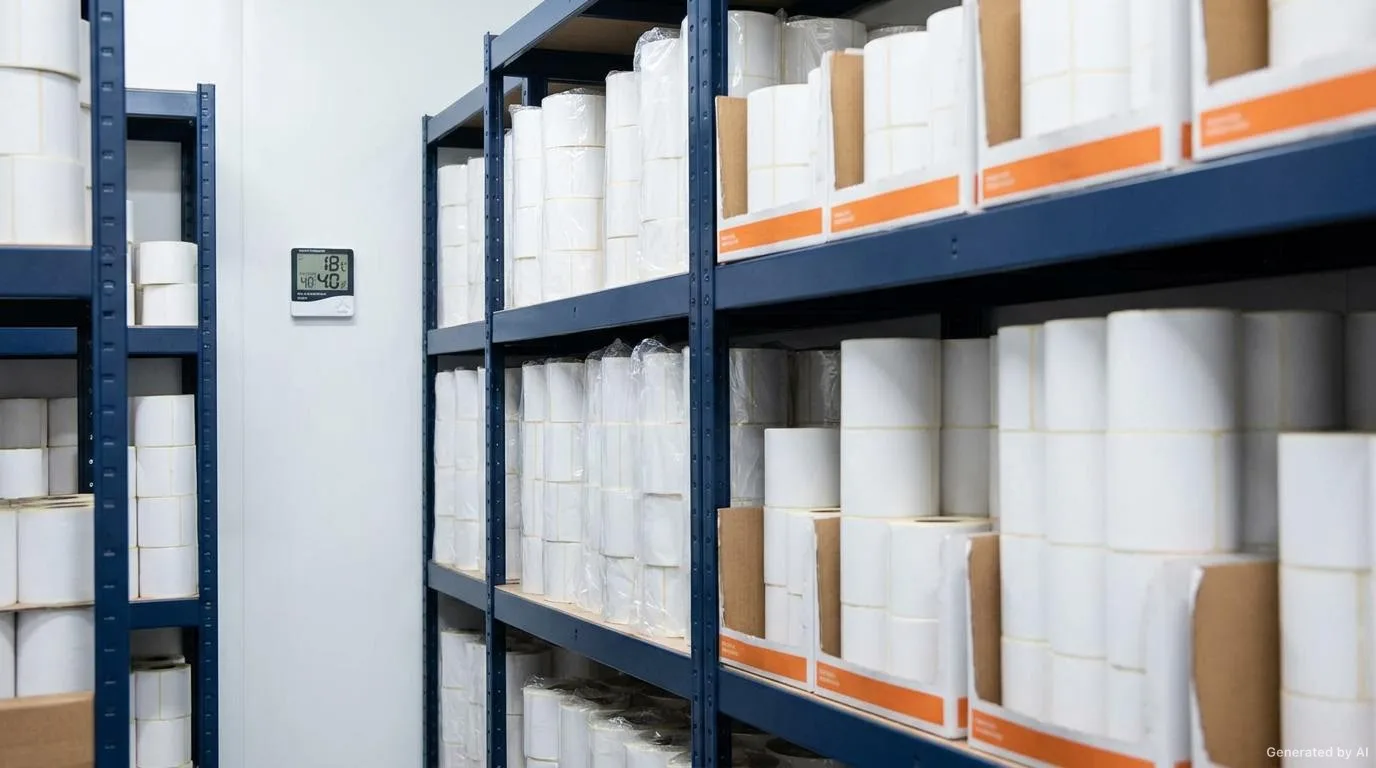
Label rolls should be stored under suitable conditions to preserve production quality. Storage temperature, humidity and direct sunlight can affect the performance of the adhesive and the material.
Points to Consider in Storage
- Store rolls in a cool, dry place with balanced humidity
- Avoid direct sunlight, excessive temperature and moisture
- Keep rolls upright and without crushing
- Follow stock on a first-in, first-out basis
Common Ordering Mistakes
- Ordering without verifying the wind direction from the machine manual
- Not comparing the core diameter with the existing roll or machine shaft
- Not checking the maximum roll outer diameter
- Not specifying the application surface and ambient conditions
- Moving directly to high-quantity production without a sample
- Ignoring service life and storage conditions
Most of these mistakes can be prevented by clarifying a few technical details before ordering. Sharing your existing label sample and equipment information speeds up the process.
Conclusion
Correctly communicating technical details in roll label orders ensures efficient production and cost optimization. Preparing information such as label dimensions, wind direction, core diameter, outer diameter and label quantity in advance speeds up the ordering process. Rather than guessing factory production limits you do not know, we can determine the best solution for you together by sharing your existing equipment information. For roll label options suited to your application, you can browse our products page, and for pre-order preparation you can use our article on the quote preparation checklist.
Frequently Asked Questions
What information is needed before ordering roll labels?
Details such as label dimensions, wind direction, core diameter, maximum roll outer diameter, label quantity, gap, material, adhesive and printing method should be prepared in advance.
Why is wind direction important?
Wind direction determines which way the label feeds into the machine. A wrong direction can cause the machine to apply the label incorrectly or not at all.
How is the core diameter chosen?
The core diameter should match the shaft size of your labeling machine. Common diameters are 25 mm, 40 mm and 76 mm and should be confirmed from the machine manual.
How is the label quantity determined?
Label quantity is determined by your production volume, inventory management and the maximum roll outer diameter your machine accepts. A higher quantity increases the roll outer diameter.
Do I need to send a sample before ordering?
An existing label sample, if any, speeds up the process and helps verify wind direction, dimensions and adhesive behavior. It is recommended, though not mandatory.
Want to Determine the Right Label for Your Product?
Share your usage area and needs with us; let's evaluate suitable options together.