Industrial Labels: Material Selection for Harsh Conditions
Industrial label material selection for temperature, humidity, chemical, abrasion and UV conditions. Material and adhesive comparison, testing and usage scenarios.
Industrial labels are exposed to much harsher conditions than ordinary product labels. Factors such as high temperature, humidity, chemical contact, abrasion, UV light and physical impact directly affect label performance. Incorrect material selection can cause the label to become illegible or fall off. In this article, we will examine in detail the key points for industrial label material selection for harsh conditions.
Define Harsh Conditions
Before selecting a material, you should clarify the conditions the label will be exposed to:
- Temperature range: What low and high temperatures will the label be exposed to? (It may range from -40°C to +200°C.)
- Moisture and water: Is there continuous moisture, rain or submersion?
- Chemical contact: Will it come into contact with acids, bases, oils, solvents or cleaning chemicals?
- Abrasion and friction: Will the label be subject to friction, scratching or impact?
- UV and outdoor: Will it be exposed to sunlight and weather for a long time?
- Sterilization: Will it pass through processes such as autoclave, gamma or ethylene oxide?
Evaluate Environmental Factors Together
Harsh conditions usually occur not individually but together. For example, a label used outdoors is exposed to both UV and rain and temperature differences. Therefore, material selection should be made according to the combination of all factors.
Application Surface
The material, roughness and surface energy of the surface to which the label is applied also determine the outcome. Rough or dusty surfaces can reduce adhesion performance.
Documenting the Conditions
Documenting the conditions in writing makes material selection objective. When temperature range, chemical list and application surface information are kept together, both sample testing and discussions with the manufacturer proceed more reliably.
Material Selection
| Material | Resistance | Suitable Use |
|---|---|---|
| PET (Polyester) | High temp, chemical, abrasion | Automotive, electronics, industrial equipment |
| Polyimide (Kapton) | Very high temp (+300°C) | Electronics, aerospace, soldering |
| BOPP / PP | Moisture, tear, medium temp | Chemicals, cosmetics, cold chain |
| PVC | Flexibility, outdoor, UV | Construction, carpentry, white goods |
| Non-woven fabric | Flexibility, textile compat. | Textiles, apparel |
| Metal label | Extreme conditions, abrasion | Heavy machinery, industrial facilities |
Characteristics of Materials
Each material stands out against a specific challenge. PET is the most common choice in general industrial use; polyimide stands out in electronics and aerospace applications with very high temperatures. Metal labels offer long life in extreme abrasion and chemical environments.
Material and Surface Finish
The surface finish of the label also affects durability. Matte lamination reduces glare, while glossy lamination provides easy cleanability. In environments with intense abrasion, a protective lamination layer is preferred.
Adhesive Selection
In industrial applications, adhesive selection is as important as the material:
- Acrylic adhesives: General purpose, good temperature and chemical resistance. Suitable for most industrial applications.
- Rubber-based adhesives: High initial tack, good performance on low energy surfaces. However, UV and high temperature resistance are lower.
- Silicone adhesives: Very high temperature resistance, for low energy surfaces. High cost.
Adhesive Type Comparison
| Adhesive | Temperature Resistance | Chemical Resistance | Low Surface Energy |
|---|---|---|---|
| Acrylic | Medium-high | Good | Medium |
| Rubber-based | Low-medium | Medium | Good |
| Silicone | Very high | Good | Good |
Adhesive and Environment Compatibility
The adhesive type should be selected according to the temperature at which the label will be applied and the surface energy. Labels applied in cold environments may require special adhesives that bond at low temperatures.
Surface Energy
On materials with low surface energy (for example some plastics), standard adhesives may bond weakly. In these cases, rubber-based or specially formulated adhesives should be preferred.
Printing and Protection
In harsh conditions, keeping the print legible is also critical. Thermal transfer printing is widely used for variable information such as barcodes and serial numbers due to its high durability. Protective lamination or varnish applied over the print reduces fading and abrasion.
| Printing Method | Durability | Use |
|---|---|---|
| Thermal transfer | High | Barcodes, serial numbers |
| Direct thermal | Medium | Short-lived information |
| Digital printing | Medium-high | Variable data, visuals |
Verification and Testing
Remember that not every material is suitable for every environment. To verify your selection:
- Conduct sample testing under actual usage conditions.
- Review manufacturer technical data sheets (TDS).
- Perform durability testing for specific durations after application.
- Verify surface energy and cleanliness.
Planning the Test Process
A correct test should imitate real usage conditions as closely as possible. Scenarios such as temperature cycles, exposure to moisture and chemical contact should be tested separately and in combination.
Technical Selection Questions
- What is the operating temperature range of the label?
- Which chemicals will it contact?
- What is the surface material and energy level?
- What will the application temperature be?
- How long should the label lifespan be?
- What are the readability and durability expectations?
Application and Usage Scenarios
Automotive and Machine Parts
In areas with high temperature and oil contact such as the engine compartment, PET or metal labels are used together with acrylic adhesives.
Chemical and Laboratory Containers
In containers with intense chemical contact, solvent-resistant film materials and protective lamination stand out.
Outdoor Equipment
On equipment continuously exposed to UV and weather, UV-resistant materials and adhesives should be preferred.
Cold Chain and Food Storage
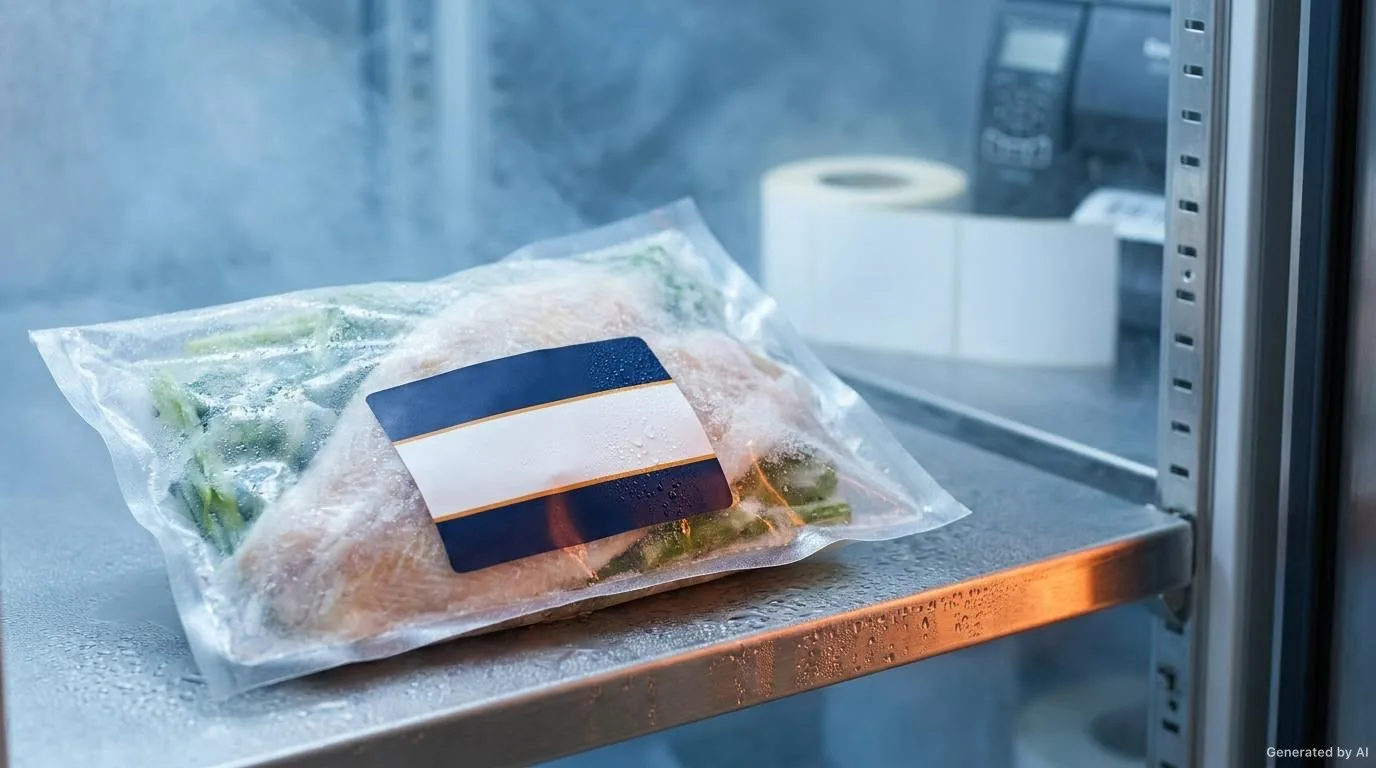
For products stored at low temperatures, adhesives that bond during and after application should be preferred. Since condensation moisture can make adhesion difficult, surface preparation is important.
Heavy Machinery and Equipment
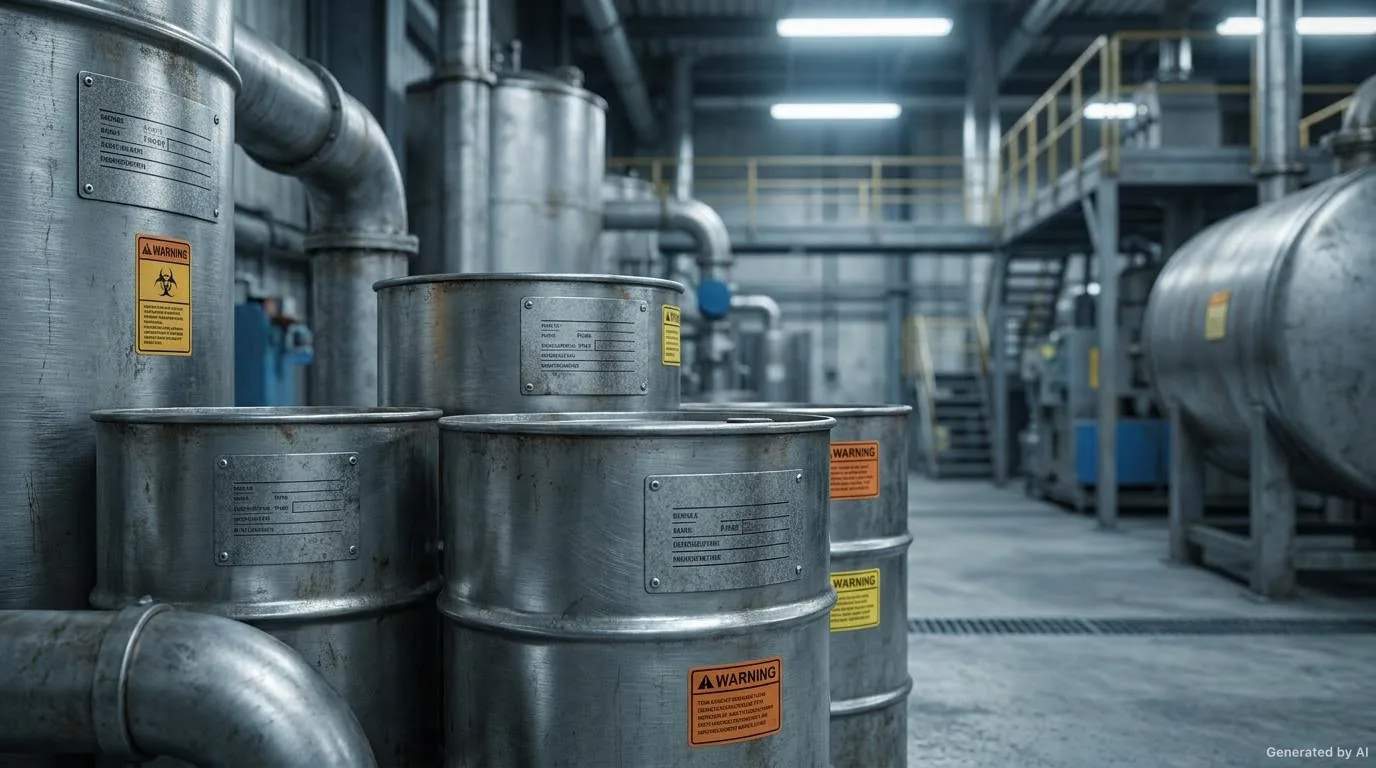
On equipment subject to continuous vibration and abrasion, metal labels or durable film materials with protective lamination provide long life.
Material Selection Checklist
- The lowest and highest temperatures the label will be exposed to are determined.
- Moisture, water and immersion conditions are clarified.
- The chemicals and solvents it will contact are listed.
- The risk of abrasion, friction and impact is assessed.
- UV and outdoor exposure are taken into account.
- The sterilization requirement is checked.
- The material and energy of the application surface are tested.
- The material, adhesive and printing method are selected according to the environment.
- The need for protective lamination or varnish is determined.
- Sample tests are planned under real conditions.
Common Mistakes
- Looking only at the starting temperature and ignoring long-term temperature cycles.
- Choosing an adhesive without measuring surface energy.
- Trusting general claims without testing chemical resistance.
- Skipping sample testing and going directly to mass production.
- Considering protective lamination unnecessary and shortening print life.
Conclusion
Material selection in industrial labels determines the performance of the product under harsh conditions. You should choose the most suitable material by evaluating factors such as temperature, moisture, chemical, abrasion and UV. Remember that not every material is suitable for every environment. Manufacturer technical data and sample testing are the most reliable ways to support your decision.
To evaluate a label solution suitable for harsh conditions together, you can browse our products page and get a material and adhesive recommendation for your application.
For details on adhesive selection, you can look at our articles on how to choose a label adhesive and on barcode labels for thermal printing applications.
Frequently Asked Questions
Which label material is most durable for harsh conditions?
Polyimide excels at very high temperatures, PET is best for general industrial use, and metal labels resist extreme abrasion.
Which adhesive is used on low energy surfaces?
Rubber-based or specially formulated adhesives adhere better on low energy surfaces.
How is label durability verified?
It is verified through sample testing under actual usage conditions and by reviewing manufacturer technical data sheets (TDS).
What should be considered for outdoor labels?
Choose UV-resistant material and adhesive, and support the print with protective lamination or varnish.
How is print readability preserved?
Thermal transfer printing and protective lamination keep information such as barcodes and serial numbers legible.
Want to Determine the Right Label for Your Product?
Share your usage area and needs with us; let's evaluate suitable options together.