Label Selection Guide: How to Choose the Right Label for Your Product
A comprehensive guide that evaluates application area, surface type, material, adhesive, printing method and cost step by step to choose the right label for your product, with a comparison table, checklist and example scenarios.
Choosing the right label for your product is not just a visual preference; it is a technical decision that directly affects shelf life, brand perception, production efficiency and customer satisfaction. An incorrectly selected label can cause problems such as falling off, fading, illegibility or production downtime. In this guide, we will examine the key criteria you should evaluate when selecting labels step by step, and share checklists and example scenarios that will ease your decision process.
1. Define the Application Area and Environment
The environment the label will be exposed to directly affects material and adhesive selection. The first questions you ask should be:
- Will the label be used indoors or outdoors?
- Will it be exposed to high temperature, humidity, chemical contact or UV light?
- Are there low temperature conditions such as cold chain or freezer?
- Will the product undergo processes such as sterilization, autoclave or pasteurization?
For example, in frozen food products, the surface to be applied is usually wet and cold. In this case, standard adhesives may be insufficient and the label may fall off. Similarly, in outdoor applications, materials and inks resistant to UV light should be preferred.
Indoor and Outdoor Use
Indoor labels are generally used under controlled temperature and humidity, so economical materials such as coated paper are often sufficient. For outdoor labels, sunlight, rain, wind and temperature variations come into play. Under these conditions, film-based materials and UV-resistant inks stand out. In outdoor use, the adhesive as well as the material must withstand temperature changes.
Temperature, Humidity and Chemical Contact
If your product is transported in the cold chain, the label must be applicable at low temperatures and must keep its adhesive performance. Conversely, for products that are baked, boiled or exposed to steam, high-temperature resistant films and adhesives are considered. For labels that come into contact with chemical cleaners, oils or solvents, the chemical resistance of the material becomes decisive. Under such demanding conditions, the material and the adhesive must be evaluated together.
2. Analyze the Surface Type
The surface to which the label is applied is decisive in adhesive selection. Surfaces are generally divided into three groups:
- High energy surfaces: Glass, metal, hard plastics (PET, PVC). Adhesion is easy.
- Medium energy surfaces: Wood, cardboard, soft plastics.
- Low energy surfaces: Polyethylene (PE), polypropylene (PP), BOPP. Special adhesives are required on these surfaces.
Additionally, whether the surface is rough, dusty, oily or curved also affects adhesion performance. Softer, conformable adhesives are preferred on rough surfaces, while standard adhesives may be sufficient on smooth surfaces.
Surface Shape and Application Conditions
Narrow-neck bottles or curved surfaces require the label to conform along the contours. In this case, thin and flexible materials together with adhesives that provide high initial tack are recommended. Cleaning the surface of dust, moisture and oil before application reduces problems such as edge lifting and bubble formation.
3. Select the Label Type and Material
Basic label materials are as follows:
| Material | Properties | Suitable Use |
|---|---|---|
| Coated paper | Cost-effective, good print quality, not moisture resistant | Dry food, cosmetics, indoor products |
| Thermal paper | Thermal printing, no ink, economical | Barcode, logistics, short-life labels |
| BOPP / PP film | Moisture and tear resistant, glossy matte options | Cold chain, cosmetics, chemical products |
| PET film | High temperature and chemical resistant, transparent | Industrial, automotive, electronics |
| Non-woven fabric | Flexible, textile appearance | Textile, apparel |
Things to Consider in Material Selection
When selecting a material, look not only at cost but also at the shelf life and the presentation of the product. Transparent films are preferred for a no-label look on clear products, while white-printed solutions improve readability on dark surfaces. Matte and glossy finishes directly affect brand perception. We detailed the differences between paper and film materials in our article comparing coated paper and film labels.
4. Determine the Printing Method
The number of colors in your label design, resolution requirement and print volume affect the printing method to be used. One of flexo, offset, digital and screen printing methods is preferred. For short-term labels with variable data, digital printing is more economical; for high-volume production, flexo printing is more economical.
Comparison of Printing Methods
| Method | Suitable Volume | Color Quality | Common Use |
|---|---|---|---|
| Flexo printing | High volume | Good, wide color | Food, fast-moving consumer goods |
| Offset printing | Medium-high volume | High, fine detail | Cosmetics, durable labels |
| Digital printing | Low-medium volume | High, variable data | Samples, personalization |
| Screen printing | Low-medium volume | Intense, opaque color | Textile, demanding conditions |
5. Size, Shape and Die-Cut
Your label size is determined by the surface area of your product and the amount of information you want to carry. A label that is too small reduces readability, while a label that is too large can cause wrinkles during application. Round, oval, rectangular or custom die-cut options can be considered to match your brand identity.
Readability and Information Hierarchy
Elements such as product name, brand, net quantity and mandatory information should appear in a certain hierarchy on the label. Font size, contrast and use of white space determine readability. The effect of color and typography on readability is a subject that deserves separate attention when finalizing the design.
6. Cost and Quantity Balance
In high-volume orders, unit cost decreases; however, you should also consider the minimum order quantity and inventory cost. For variable designs or frequently updated information, lower-volume, flexible production options can be considered.
Calculating the Total Cost Correctly
When evaluating label cost, looking only at the unit price can be misleading. Plate and setup costs, waste rate, losses during application and storage conditions affect the total cost. A durable and problem-free label can be more economical than a solution that looks cheaper in the short term but is replaced frequently.
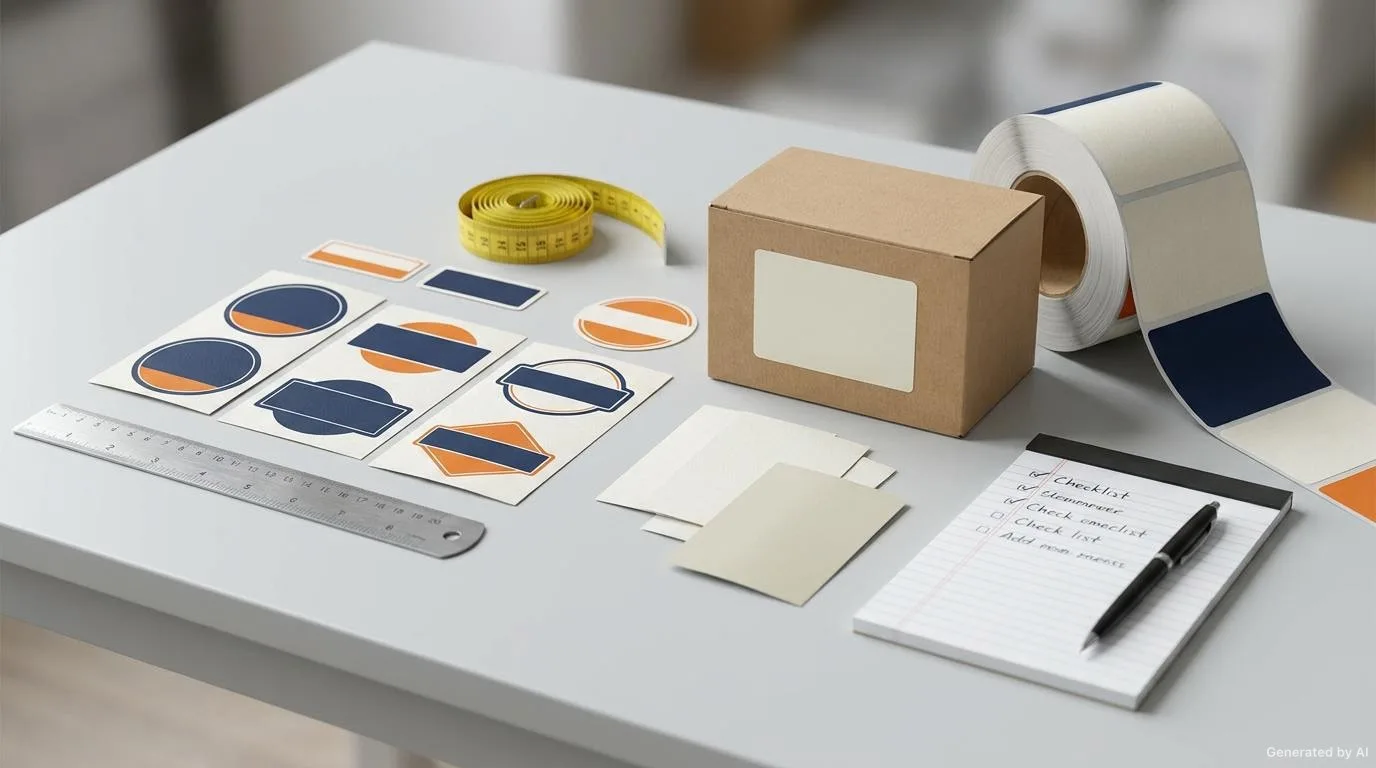
Label Selection Checklist
- I defined the environment (temperature, humidity, chemical) where the label will be used.
- I determined the surface type and energy level.
- I selected the appropriate material (paper, film, fabric).
- The adhesive type is suitable for the surface and environment.
- The printing method is suitable for the design and quantity.
- Size and shape are compatible with the product.
- Readability and shelf appearance were tested.
- Cost is within budget.
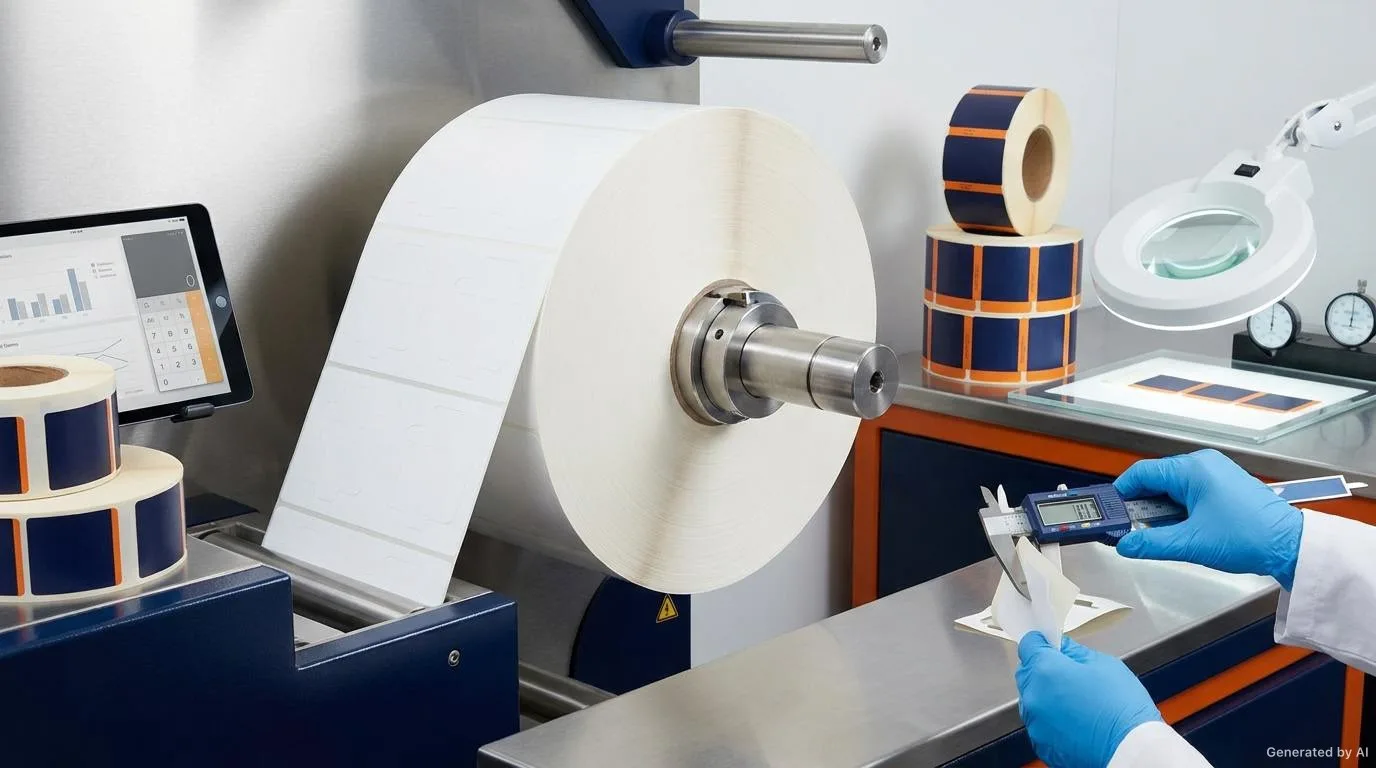
- I tested and approved samples.
Example Selection Scenarios
Scenario 1 — Frozen Food
Application to wet and cold surface. Low-temperature resistant BOPP film and acrylic adhesive that adheres under freezing conditions are preferred. Printing can be flexo or digital.
Scenario 2 — Cosmetic Bottle
Transparent glass or PET bottle surface. Transparent BOPP film, white printing and matte or glossy lamination for a luxurious look can be selected.
Scenario 3 — Warehouse Barcode
Short life, fast production required. Direct thermal printing and thermal paper is an economical solution. Barcode readability and correct print settings are essential for reliable scanning.
Common Selection Mistakes
- Focusing only on price and ignoring usage conditions.
- Not testing surface energy and adhesive compatibility.
- Moving to high-volume production without a sample.
- Using a short-life material on a long-life product.
- Choosing designs with small fonts and low readability.
Conclusion
The right label selection determines the first impression and long-term performance of your product. Clarifying your technical requirements helps you establish the balance between cost and quality. Testing samples to determine the most suitable solution for your product is the most reliable way to detect potential issues before production.
If you would like to share your label requirements and evaluate a suitable solution together, you can review our products or contact us for a quote. You can also look at our quote preparation checklist to clarify your needs faster.
Frequently Asked Questions
What should be considered first when selecting a label?
The environment where the label will be used and the surface type are the first points to evaluate. Conditions such as temperature, humidity, chemical contact and UV light determine the material and adhesive choice.
For which products is coated paper suitable?
Coated paper offers cost-effectiveness and good print quality for dry food, cosmetics and indoor products. However, its resistance to moisture and long-term outdoor exposure is low.
Which material is preferred for frozen products?
For wet and cold surfaces, low-temperature resistant BOPP film and an acrylic adhesive that holds under freezing conditions are preferred.
Why is sample testing important?
Sample testing is the most reliable way to detect potential issues such as adhesion, readability and shelf appearance before production.
How is the printing method selected?
Depending on the number of colors, resolution and volume, one of flexo, offset, digital or screen printing is chosen. Digital is more economical for variable data and low volumes, flexo for high volumes.
Want to Determine the Right Label for Your Product?
Share your usage area and needs with us; let's evaluate suitable options together.